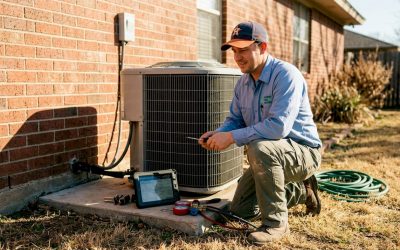
Choosing between replacing an aging air conditioning system or upgrading to a heat pump depends on your home’s layout, climate zone, long-term energy goals, and the equipment currently installed. In warmer regions like Pearland, TX, heat pumps provide both cooling and heating with improved energy efficiency, while standard AC units remain reliable for homes with existing furnaces.
Installation factors, system size, and SEER ratings all influence performance and cost. We help homeowners make smart HVAC upgrades with expert guidance and precision system sizing.
What’s the Difference Between a Heat Pump and AC Replacement?
Central air conditioners cool your home only, while heat pumps handle both heating and cooling in one system. Knowing this difference is key to selecting the right solution.
An air conditioning system is designed solely for cooling. It removes heat from indoor air and circulates cooled air through ducts. In contrast, a heat pump uses the same components as an AC but reverses its cycle to provide heating when needed. For homes that already have a furnace in place, replacing the AC may be a straightforward option. On the other hand, if you’re looking for year-round comfort without relying on two separate systems, a heat pump installation could be a better fit.
When we assist with AC replacements in Pearland and surrounding areas, one of the first steps is reviewing whether the home has the electrical capacity and duct design to support a more efficient upgrade.
SEER Ratings and Efficiency: What to Know Before You Upgrade
SEER stands for Seasonal Energy Efficiency Ratio, a system’s efficiency score. Higher SEER ratings often translate to lower monthly utility costs and improved long-term savings.
When comparing heat pumps to air conditioners, energy efficiency should be one of the first metrics to evaluate. Heat pumps with high SEER and HSPF ratings can outperform traditional cooling systems during mild heating months. However, a new central AC system with a SEER rating of 16 or higher may still meet your needs effectively.
We often guide customers to consider our smart HVAC products and monitoring systems that support energy tracking and programmable operation, which can further reduce energy waste regardless of which system you choose.
Climate Considerations for Pearland Homes
The Gulf Coast region experiences high humidity, long cooling seasons, and relatively short cold spells. That makes both heat pumps and AC units viable, depending on the home’s specific needs.
Heat pumps are typically recommended for climates with moderate winters. In Pearland, the cooler months are short and not extremely cold, so heat pump systems can function efficiently most of the year. If your home has an existing furnace or gas heating system in good condition, then replacing the AC unit alone may be more cost-effective in the short term.
For homeowners upgrading older HVAC systems, ductless mini split options are also available, offering a zone-specific solution when central ductwork needs to be avoided.
Upfront Costs vs Long-Term Savings
While heat pumps usually come with higher initial installation costs, they can offer noticeable savings over time due to energy efficiency and reduced maintenance.
Installing a heat pump may require changes to duct layout, electrical panels, or even thermostat systems. These adjustments can increase upfront costs. However, because a heat pump handles both heating and cooling, it eliminates the need for two separate systems, saving money over the system’s lifespan.
On the other hand, AC replacements generally have lower upfront costs and shorter installation timelines, especially when matched to existing furnace setups. Before you decide, it’s a good idea to request a free estimate or book an evaluation so we can break down the full cost comparison, including available rebates and SEER-specific incentives.
Installation Requirements and System Sizing
Correctly sizing your HVAC system avoids overworking the unit and keeps energy bills in check. System sizing is one of the most critical parts of the installation process.
Oversized systems short-cycle and waste electricity, while undersized units struggle to maintain desired temperatures. We perform Manual J load calculations to determine the exact heating and cooling demands of your home. This method accounts for insulation, duct length, window exposure, and more.
For homes switching from AC to a heat pump, we may also inspect the refrigerant lines and indoor coil compatibility. Ongoing AC maintenance plans support optimal performance post-installation and help preserve warranties.
Dual-Fuel Systems: A Middle Ground Option
A dual-fuel system combines the high efficiency of a heat pump with the reliability of a backup furnace, delivering flexibility during colder months.
If you’re interested in energy savings but live in a home that occasionally faces colder temperatures, a hybrid system could offer the best of both worlds. These setups use the heat pump during mild conditions and switch to a gas furnace when extra warmth is needed.
In these cases, existing gas lines and furnace health are evaluated as part of the system design. Our furnace service team helps ensure that components are running safely and efficiently before installation begins.
How We Help Pearland Homeowners Make the Right Choice
With decades of experience in local HVAC installations, we guide homeowners toward systems that align with their usage, efficiency goals, and budget.
Our technicians perform on-site inspections to evaluate your existing system, duct configuration, and insulation quality. From there, we recommend either a high-efficiency AC upgrade or a heat pump installation, depending on the home’s requirements.
We handle installations using proven Manual J methodology and provide clear estimates before any work begins. You can schedule service online or contact our team directly to begin the process.
Final Thoughts
Whether you’re considering a standard AC replacement or exploring a heat pump upgrade, the best decision depends on how you use your HVAC system throughout the year. For homes in Pearland, both options are valid, and in some cases, a hybrid solution may offer the most balanced comfort and savings. We install both systems using licensed technicians and proven load analysis, ensuring your investment performs long after installation day.
Q1: Is it better to install a heat pump or replace my AC?
A heat pump is ideal for year-round efficiency in mild climates, while replacing your AC is better if you already have a reliable furnace installed.
Q2: Are heat pumps worth it in Texas?
Yes, for areas like Pearland with mild winters, heat pumps can reduce energy costs and eliminate the need for a separate heating system.
Q3: What is the lifespan of a new heat pump vs AC?
Both systems can last 10–15 years when installed correctly and maintained regularly. Proper system sizing and maintenance are key.
Q4: How much does a heat pump cost vs an AC unit?
Heat pumps generally cost more upfront but offer long-term energy savings. AC units are often cheaper to install, especially if paired with an existing furnace.
Q5: Can I switch from central AC to a heat pump?
Yes, switching is possible. It may require adjustments to ductwork, refrigerant lines, or electrical systems, which a licensed technician can assess.