Most homeowners believe their HVAC system just heats and cools, but it plays a massive role in cleaning the air you breathe every day. Brazoria County’s humid climate creates perfect conditions for mold, allergens, and airborne pollutants to thrive indoors. Your HVAC system can be your strongest defense against these threats when optimized correctly. This guide reveals how your system purifies air, controls humidity, and what steps you can take to maximize its air quality benefits.
Key Takeaways
| Point | Details |
|---|---|
| Filtration captures particles | MERV 13 filters capture 98% of airborne particles, while HEPA filters remove 99.97% of pollutants. |
| Humidity control prevents mold | Maintaining humidity between 35% and 50% stops mold growth in Brazoria’s climate. |
| Maintenance sustains clean air | Replacing filters every 1 to 3 months and duct cleaning removes 99.9% of allergens. |
| Advanced tech neutralizes pathogens | UV-C lights eliminate 99.9% of airborne viruses trapped by filters. |
| ERV systems conserve energy | Energy recovery ventilators retain 80% of heating or cooling energy while exchanging stale air. |
How HVAC Systems Filter and Purify Your Indoor Air
Your HVAC doesn’t just move air around. It actively removes dust, pollen, pet dander, smoke, and bacteria that commonly circulate in Brazoria County homes. Every time air passes through your system, filters trap particles before redistributing cleaner air throughout your living spaces. Understanding filter types and ratings helps you choose the right protection for your family’s health.
MERV ratings indicate filter efficiency, with MERV 13 recommended for residential use in our region. These filters capture up to 98% of airborne particles, including mold spores and fine dust that aggravate allergies. HEPA filters provide even higher protection, removing up to 99.97% of particles as small as 0.3 microns. However, HEPA filters require compatible HVAC systems because their dense material can restrict airflow if your unit isn’t designed to handle them.
Balancing filtration power with system performance is crucial. Higher MERV filters trap more particles but can strain older HVAC units not built for increased resistance. If your system struggles with airflow after upgrading filters, you may need a professional assessment to avoid damaging your equipment. Learning about the 3 types of indoor pollutants helps you target specific threats.
Common HVAC filter types used by homeowners:
- Fiberglass filters: Basic protection, MERV 1 to 4, captures large particles like dust and lint
- Pleated filters: Moderate efficiency, MERV 8 to 13, traps pollen, mold spores, and pet dander
- Electrostatic filters: Reusable, MERV 8 to 10, uses static charge to attract particles
- HEPA filters: Maximum filtration, MERV 17 to 20, removes microscopic pollutants and bacteria
- Activated carbon filters: Absorbs odors, smoke, and volatile organic compounds alongside particle filtration
| Filter Type | MERV Rating | Particle Capture | Best For |
|---|---|---|---|
| Fiberglass | 1 to 4 | Large dust, lint | Basic protection |
| Pleated | 8 to 13 | Pollen, mold, dander | Residential use |
| HEPA | 17 to 20 | 99.97% of particles | Allergies, asthma |
| Activated Carbon | Varies | Odors, VOCs | Chemical sensitivity |
Pro Tip: Upgrade to MERV 11 or 13 filters during Brazoria County’s high pollen seasons, but check your HVAC manual first to confirm compatibility and avoid airflow restrictions that reduce system efficiency.
Considering whole-house air purifiers adds another layer of protection beyond standard filtration. These systems integrate directly with your HVAC to provide continuous air cleaning throughout every room.
Humidity Control and Ventilation: Preventing Mold and Improving Comfort in Brazoria County
High humidity creates perfect breeding grounds for mold, mildew, and dust mites inside your home. Brazoria County’s coastal climate means outdoor humidity regularly exceeds 70%, and without proper HVAC humidity management, indoor levels quickly reach dangerous territory. Your HVAC system, equipped with integrated dehumidifiers, actively pulls excess moisture from the air before it condenses on surfaces.
Controlling humidity between 35% and 50% is crucial to prevent mold growth in our humid region. When indoor humidity climbs above 60%, mold spores germinate within 24 to 48 hours on damp surfaces like bathroom walls, window frames, and ductwork. Dehumidifiers integrated with HVAC reduce humidity below 60%, inhibiting mildew growth and creating an uncomfortable environment for allergens.
Proper ventilation exchanges stale indoor air containing carbon dioxide, cooking odors, and chemical fumes with fresh outdoor air. Modern HVAC systems use controlled ventilation to dilute indoor pollutants without sacrificing energy efficiency. This constant air exchange prevents pollutant buildup that occurs in tightly sealed homes.
Effective steps HVAC systems use for humidity control and ventilation:
- Integrated dehumidifiers extract moisture during cooling cycles without overcooling your home
- Variable-speed fans adjust airflow to maintain consistent humidity levels throughout the day
- Fresh air intakes bring outdoor air into the system while exhausting stale indoor air
- Programmable thermostats with humidity sensors automatically trigger dehumidification when needed
- Proper duct insulation prevents condensation that adds moisture back into circulating air
Learning to manage humidity inside your home extends beyond just HVAC operation. Simple habits like running exhaust fans during showers, venting clothes dryers outside, and fixing plumbing leaks complement your system’s moisture control efforts.
Pro Tip: Schedule HVAC maintenance in early spring before Brazoria County’s humid summer months arrive to ensure your system’s dehumidification components work at peak efficiency when you need them most.
The Critical Role of Regular HVAC Maintenance in Sustaining Clean Air
Even the best HVAC system loses its air-cleaning power without consistent maintenance. Filters clogged with dust stop trapping new particles and force your system to work harder, reducing airflow and energy efficiency. Ducts accumulate years of dust, pet dander, dead skin cells, and microbial contaminants that recirculate through your home every time the system runs.
Regular filter replacement every 1 to 3 months sustains optimal filtration performance. The replacement frequency depends on your filter type, household size, presence of pets, and local air quality conditions. Homes with multiple pets or allergy sufferers need more frequent changes to maintain clean air. Skipping filter changes creates a cascade of problems including reduced air quality, higher energy bills, and potential system damage.
Duct cleaning removes up to 99.9% of dust and allergens, preventing pollutant recirculation through your living spaces. Professional duct cleaning every 3 to 5 years eliminates buildup that standard filters cannot address. This service becomes especially important after home renovations, water damage incidents, or if you notice musty odors when your HVAC runs.
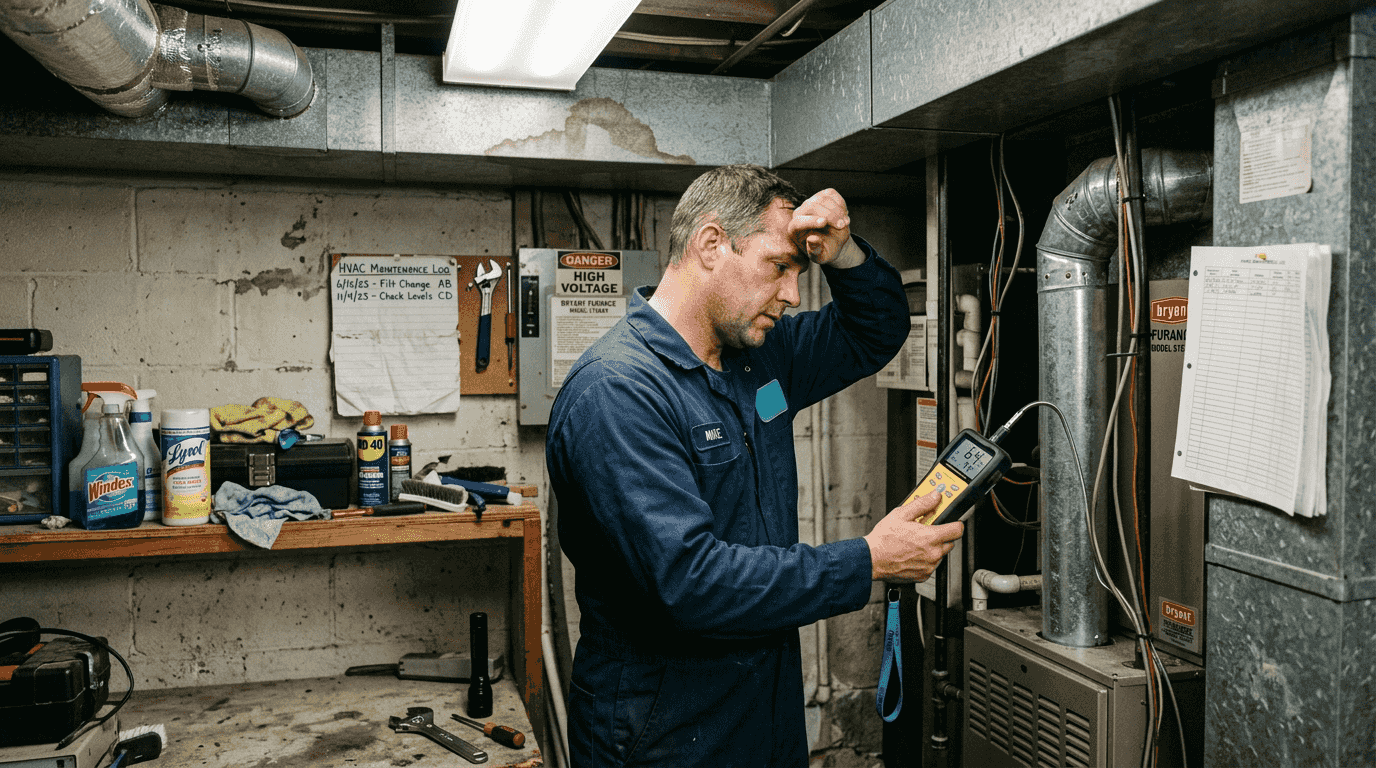
Scheduled maintenance maximizes both air quality and HVAC energy efficiency by keeping all components clean and properly calibrated. Technicians inspect coils, drain pans, and blower assemblies where moisture and dirt accumulate, creating environments for bacterial and mold growth.
Steps homeowners should follow to maintain HVAC system air quality:
- Replace air filters according to manufacturer recommendations and household conditions
- Schedule professional HVAC maintenance twice yearly before cooling and heating seasons
- Inspect air vents and returns monthly for dust buildup and obstructions
- Clean outdoor condenser units quarterly to prevent debris from entering the system
- Monitor indoor humidity levels with a hygrometer and adjust HVAC settings accordingly
- Arrange professional air duct cleaning every 3 to 5 years
- Check and clean drain lines annually to prevent moisture problems
Professional duct cleaning services report removing an average of 6 pounds of dust and debris from typical residential HVAC systems, dramatically improving air circulation quality and reducing allergen exposure for occupants.
Consistent maintenance pays dividends through better health outcomes, lower utility costs, and extended equipment lifespan. The small investment in routine service prevents expensive repairs and maintains the air quality benefits your HVAC system provides.
Advanced HVAC Features to Enhance Air Safety in Your Home
Beyond standard filtration and humidity control, emerging HVAC technologies offer additional protection against airborne threats. UV-C light systems installed inside your ductwork or air handler kill viruses, bacteria, and mold spores that filters trap but don’t destroy. These lights emit ultraviolet radiation that damages pathogen DNA, rendering microorganisms unable to reproduce or cause infection.
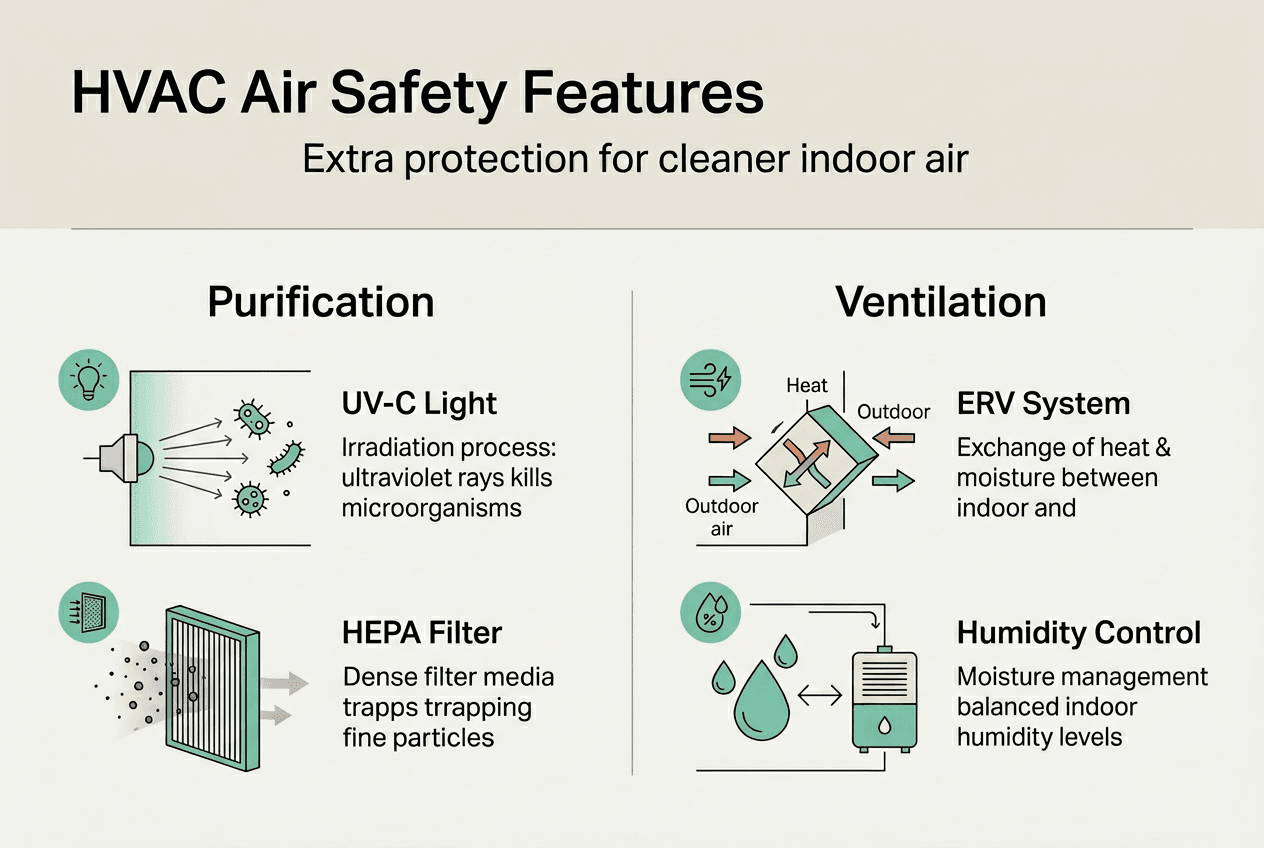
UV-C lights neutralize up to 99.9% of certain airborne pathogens, including influenza, coronavirus strains, and Staphylococcus bacteria. The lights work continuously whenever your HVAC runs, providing an extra layer of protection, particularly valuable for households with immunocompromised members or chronic respiratory conditions. Installation costs typically range from $500 to $1,500, depending on system size and complexity.
Energy recovery ventilators continuously exchange stale indoor air with fresh outside air while conserving heating and cooling energy. ERV systems retain up to 80% of heating or cooling energy during air exchange by transferring temperature and humidity between incoming and outgoing airstreams. This technology solves the ventilation challenge without the energy penalty of simply opening windows.
| Feature | How It Works | Primary Benefits | Considerations |
|---|---|---|---|
| UV-C Lights | Ultraviolet radiation destroys pathogen DNA in ductwork | Kills 99.9% of viruses and bacteria, prevents biological growth | Requires annual bulb replacement, works best with quality filtration |
| ERV Systems | Heat exchanger transfers energy between incoming and outgoing air | Fresh air without energy loss, balanced humidity control | Higher upfront cost, requires professional installation and maintenance |
Additional advanced HVAC features improving air safety:
- Bipolar ionization releases charged particles that attach to and neutralize airborne contaminants
- Smart thermostats monitor indoor air quality metrics and adjust ventilation automatically
- HEPA filtration cabinets integrate with existing HVAC for hospital-grade air cleaning
- Photocatalytic oxidation uses UV light and a catalyst to break down volatile organic compounds
- Zoned HVAC systems allow independent air quality control for different areas of your home
Pro Tip: Consider UV-C lights or ERV systems if anyone in your household suffers from severe allergies, asthma, or immune system vulnerabilities, as the health benefits often justify the investment within 2 to 3 years through reduced medical costs.
Staying informed about indoor air quality innovation helps you make smart decisions as new technologies emerge and become more affordable.
Ready to Improve Your Indoor Air Quality? Trust Colley Refrigeration Today
Your HVAC system holds tremendous potential to transform your home’s air quality, but only when properly maintained and optimized for Brazoria County’s unique climate challenges. Colley Refrigeration brings over 47 years of expertise, helping local families breathe cleaner, healthier air through professional HVAC services, including repairs, installations, and comprehensive maintenance programs.

Our technicians understand the specific air quality threats facing Brazoria County homeowners and customize solutions to address your family’s needs. From filter upgrades and humidity control to advanced UV-C light installations, we provide honest recommendations backed by transparent pricing. Regular maintenance through our service plans ensures your system delivers maximum air quality benefits while reducing energy costs and preventing unexpected breakdowns.
Understanding the importance of HVAC maintenance protects your investment and your health. Schedule your comprehensive air quality inspection today and take advantage of our AC service coupons to get started with affordable professional care.
Frequently Asked Questions
How often should I replace my HVAC air filter to maintain good air quality?
Typically, every 1 to 3 months, depending on filter type, household size, pets, and local air quality conditions. Homes with multiple pets or allergy sufferers need monthly changes, while households without pets can extend to 3 months for standard pleated filters. Check your filter monthly and replace it when visibly dirty to ensure optimal filtration and airflow.
Can HVAC systems alone eliminate mold and indoor allergens in Brazoria County homes?
HVAC systems significantly reduce allergens and mold growth but work best combined with proper ventilation, humidity control, and regular cleaning. Your system captures airborne particles and manages moisture, but addressing water leaks, improving bathroom ventilation, and reducing clutter where dust accumulates enhances overall effectiveness. Multiple approaches working together provide the most comprehensive air quality protection.
What are the signs that my HVAC system needs maintenance to improve air quality?
Reduced airflow from vents, unusual musty or burning odors, inconsistent temperatures between rooms, visible dust buildup around registers, and increased allergy symptoms all suggest maintenance is overdue. Strange noises, higher energy bills, and frequent cycling also indicate problems affecting air quality. Address these warning signs promptly through professional inspection to prevent air quality decline and system inefficiency.
Are advanced HVAC technologies like UV-C lights worth the investment for homeowners?
They add significant benefits for reducing airborne pathogens, especially for households with allergy sufferers, young children, elderly members, or anyone with a compromised immune system. UV-C lights neutralize 99.9% of certain viruses and bacteria, providing protection that standard filters cannot match. The initial investment of $500 to $1,500 balances against improved health outcomes and reduced medical expenses. Families prioritizing indoor air quality innovation find these technologies deliver measurable value.
Recommended