Key Takeaways
| Point | Details |
|---|---|
| Structured diagnostics save time | Prioritizing common failure points like thermostats and airflow issues resolves 55% of HVAC problems efficiently. |
| Texas climate demands a specialized approach | Extreme heat and humidity cause unique failures in capacitors, coils, and drainage systems requiring targeted diagnosis. |
| Preventive maintenance prevents 70% of breakdowns | Regular inspections and component checks extend system life and reduce emergency repair costs significantly. |
| Professional tools ensure accuracy | Digital multimeters, thermal cameras, and refrigerant detectors identify issues invisible to homeowners. |
| Monitoring KPIs improves performance | Tracking uptime and maintenance compliance helps maintain 95-98% system reliability year-round. |
Understanding HVAC System Diagnosis Essentials
Professional HVAC diagnosis relies on specialized tools that measure electrical performance, refrigerant levels, airflow, and combustion efficiency. Common diagnostic tools include digital multimeters, refrigerant leak detectors, manifold gauge sets, thermal imaging cameras, manometers, and combustion analyzers. Each tool serves a specific purpose in identifying system failures.
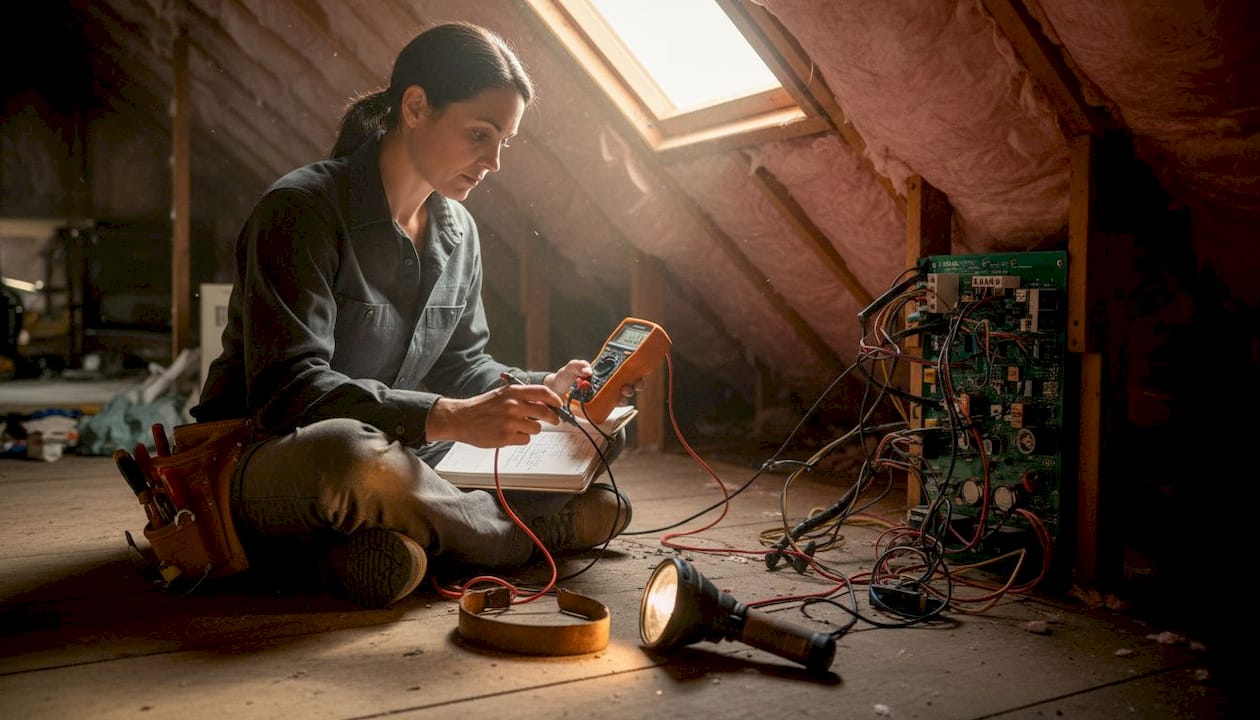
Digital multimeters measure voltage, amperage, and resistance in electrical components like compressors, fans, and control boards. Refrigerant leak detectors pinpoint escaping coolant that reduces cooling capacity and increases energy consumption. Manifold gauge sets measure refrigerant pressure on both high and low sides of the system, revealing compressor problems, blockages, or charge issues. Thermal imaging cameras visualize temperature differences across ductwork, coils, and insulation, exposing air leaks and inefficient heat transfer.
Manometers measure static pressure in ductwork to diagnose airflow restrictions from dirty filters, blocked vents, or undersized ducts. Combustion analyzers test furnace efficiency and safety by measuring oxygen, carbon monoxide, and flue gas temperatures. These tools require professional training because misuse can damage equipment or create safety hazards.
Pro Tip: Understanding what HVAC systems do and how they work helps you communicate symptoms accurately to technicians, speeding diagnosis and reducing service time.
Key diagnostic tools and their functions:
- Digital multimeters verify electrical continuity and component function
- Refrigerant gauges measure system pressures, revealing charge and flow issues
- Thermal cameras detect temperature anomalies, indicating air leaks or insulation failures
- Manometers assess ductwork airflow and static pressure problems
- Combustion analyzers ensure furnace safety and efficiency compliance
Professional technicians interpret data from multiple tools simultaneously to diagnose complex interactions between electrical, mechanical, and refrigerant systems. A single symptom like insufficient cooling might stem from low refrigerant, dirty coils, a faulty compressor, or blocked airflow. Accurate diagnosis requires systematic testing across all subsystems.
Common HVAC Diagnosis Sequence and Texas-Specific Challenges
Effective troubleshooting follows a prioritized sequence addressing the most common failure points first. Structured troubleshooting sequence prioritizes thermostat and controls at 30% of issues, airflow and filters at 25%, electrical and power at 20%, and refrigerant and coils for the remaining problems. This approach resolves most issues quickly without extensive disassembly.
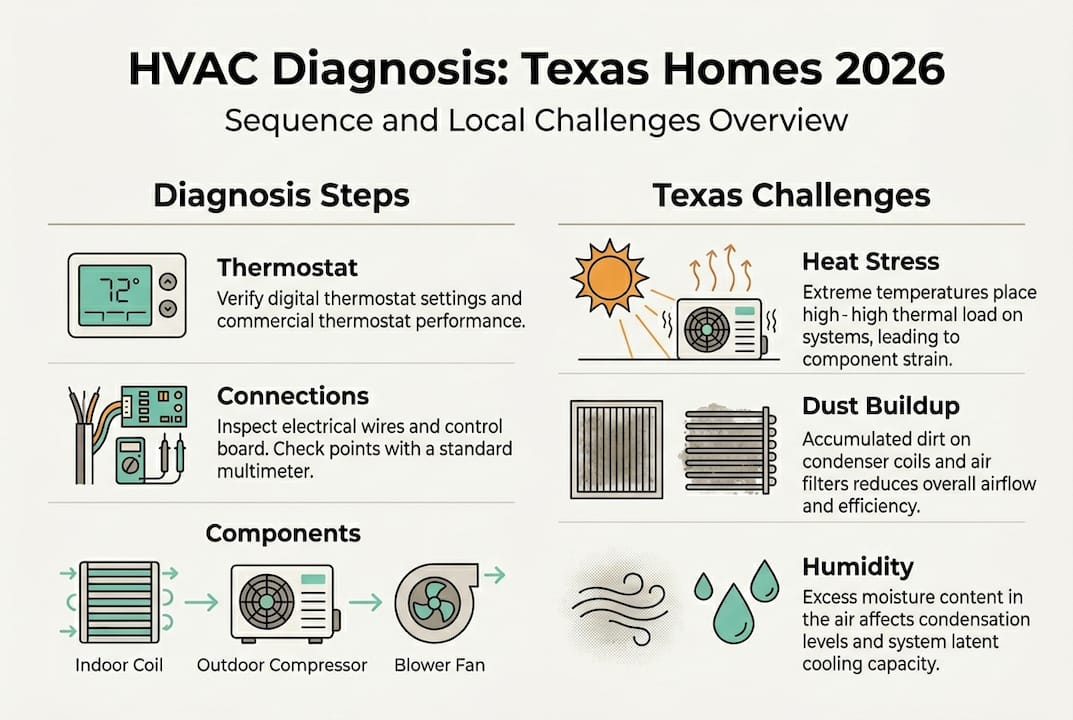
Start the diagnosis by verifying thermostat settings, battery condition, and programming. Incorrect temperature setpoints or dead batteries cause 30% of service calls unnecessarily. Next, inspect air filters, supply vents, and return grilles for blockages reducing airflow by 25% or more. Dirty filters force systems to work harder, increasing energy costs and component wear.
Check electrical connections, circuit breakers, and disconnect switches before testing individual components. Loose wiring, tripped breakers, or blown fuses account for 20% of HVAC failures. Finally, test refrigerant charge, coil cleanliness, and compressor operation. Low refrigerant or dirty coils reduce capacity and efficiency dramatically.
Pro Tip: Following a systematic HVAC maintenance checklist prevents many diagnostic issues by catching problems during routine inspections.
Prioritized HVAC troubleshooting sequence:
- Verify thermostat settings, batteries, and programming accuracy
- Inspect and replace air filters, check vent obstructions
- Test electrical connections, breakers, fuses, and disconnect switches
- Measure refrigerant pressures and inspect coil condition
- Evaluate compressor operation and motor performance
- Assess ductwork integrity and insulation effectiveness
Texas’s climate introduces unique diagnostic challenges. Texas-specific edge cases include capacitor failure from attic heat exceeding 130°F, condenser coil fouling from dust and cottonwood, evaporator coil freeze from low refrigerant or low airflow, drainage blockages from algae in humid areas, and thermal overload in 100°F+ summers, reducing capacity 15-25%. These failures require specialized diagnostic approaches.
| Fault Type | Texas-Specific Cause | Primary Symptom | Diagnostic Indicator |
|---|---|---|---|
| Capacitor failure | Attic temperatures above 130°F | Compressor won’t start or hums | Bulging capacitor, zero capacitance reading |
| Condenser fouling | Dust storms, cottonwood debris | Reduced cooling, high energy bills | Blocked fins, high head pressure |
| Coil freeze | Low refrigerant in extreme heat | Ice on indoor coil, no cooling | Low suction pressure, frost buildup |
| Drain blockage | Algae growth in humidity | Water leaks, musty odors | Standing water in pan, clogged line |
| Thermal overload | Sustained 100°F+ operation | Intermittent shutdown, weak cooling | High amp draw, frequent cycling |
Understanding these Texas-specific patterns helps you recognize symptoms requiring immediate professional attention. Capacitor failures spike in summer when attic units experience extreme temperatures. Condenser coils collect dust and organic debris faster in Texas than in moderate climates, requiring more frequent cleaning. The diagnostic process in Lake Jackson accounts for coastal humidity and temperature extremes affecting system performance.
Importance of Preventive Maintenance and Monitoring KPIs for Efficient HVAC Operation
Regular maintenance prevents most diagnostic issues before they cause system failures. Preventive maintenance reduces breakdowns 70%, energy use 15-20%; mean time between failures increases 90-175 hours with condition-based maintenance; HVAC uptime targets 95-98%; 82% of unplanned failures stem from ignored symptoms. These statistics demonstrate maintenance’s dramatic impact on reliability and efficiency.
Preventive maintenance includes filter changes, coil cleaning, refrigerant checks, electrical inspections, and lubrication of moving parts. Each action addresses specific failure modes before they escalate into expensive repairs. Dirty filters reduce airflow, causing compressor overwork and premature failure. Neglected coils lose heat transfer efficiency, forcing systems to run longer and consume more energy.
Tracking maintenance compliance and system uptime provides objective performance measures. Professional property managers monitor preventive maintenance completion rates, mean time between failures, and unplanned downtime percentages. Residential homeowners benefit from simpler metrics like annual tune-up completion and energy bill trends.
“Implementing condition-based preventive maintenance increases mean time between failures by 90 to 175 hours compared to reactive approaches, while reducing energy consumption by 15 to 20 percent through optimized system performance.”
Key preventive maintenance actions for Texas HVAC systems:
- Replace air filters monthly during peak cooling season
- Clean condenser coils quarterly to remove dust and debris
- Inspect and clear condensate drains every three months
- Test capacitors annually before summer heat arrives
- Verify refrigerant charge and pressures during seasonal tune-ups
- Tighten electrical connections and test voltage annually
- Lubricate fan motors and check belt tension seasonally
Understanding why HVAC maintenance matters helps you prioritize regular service over reactive repairs. Preventive approaches cost significantly less than emergency breakdowns during Texas summer heat waves. Systems receiving regular maintenance maintain efficiency ratings and deliver consistent comfort.
Recognizing seven common signs your HVAC needs repair enables early intervention before minor issues become major failures. Strange noises, weak airflow, unusual odors, frequent cycling, rising energy bills, uneven temperatures, and visible leaks all indicate problems requiring professional diagnosis.
Navigating DIY vs. Professional Diagnosis for Texas HVAC Systems
Homeowners can safely handle basic diagnostic checks, while complex issues require licensed professionals. DIY is suitable for filter replacements and thermostat tweaks, while professional service is recommended for refrigerant and electrical issues due to safety and warranty; reactive maintenance costs 50% more than preventive; visual TREC inspections differ from full TDLR technical assessments. Understanding these boundaries prevents dangerous mistakes and protects equipment warranties.
Safe DIY diagnostics include checking thermostat batteries, replacing air filters, clearing debris from outdoor units, verifying circuit breakers, and ensuring vents remain unobstructed. These tasks require no special tools or technical knowledge. Homeowners can also monitor system performance by tracking cooling times, listening for unusual sounds, and noting temperature inconsistencies between rooms.
Professional diagnosis becomes necessary for refrigerant issues, electrical component failures, compressor problems, ductwork modifications, and safety concerns. Refrigerant handling requires EPA certification due to environmental regulations and safety risks. Electrical work poses shock and fire hazards without proper training and tools. Compressor diagnosis involves high-pressure systems and expensive components, where mistakes cost thousands.
| Aspect | DIY Diagnosis | Professional Diagnosis |
|---|---|---|
| Cost | Free to minimal | $75 to $200 service call |
| Safety | Low risk for basic checks | Handles high voltage, refrigerant, pressure |
| Accuracy | Limited to visible symptoms | Comprehensive testing with specialized tools |
| Warranty | May void manufacturer coverage | Maintains warranty compliance |
| Scope | Filters, thermostats, basic cleaning | Electrical, refrigerant, complex repairs |
| Time | Immediate for simple issues | Scheduled appointment required |
Texas regulations distinguish between visual home inspections and technical HVAC assessments. Real Estate Commission inspections identify obvious defects and safety concerns without disassembling equipment. Department of Licensing and Regulation technical inspections involve comprehensive testing, measurements, and component evaluation by licensed technicians.
Pro Tip: Attempting repairs beyond your skill level often creates additional problems, turning a simple fix into an expensive overhaul. When in doubt, consult professionals.
Ignoring symptoms leads to cascading failures and emergency repairs costing 50% more than scheduled maintenance. A refrigerant leak left unaddressed damages the compressor through inadequate lubrication and overheating. Dirty coils force the system to work harder, accelerating wear on all components. Small electrical issues create arcing that destroys control boards and wiring.
Situations requiring immediate professional diagnosis:
- Complete system failure with no power or response
- Refrigerant leaks indicated by ice buildup or hissing sounds
- Burning smells suggesting electrical problems or overheating
- Water leaks inside the home from condensate issues
- Loud grinding, squealing, or banging noises from equipment
- Frequent cycling on and off indicates control problems
Understanding symptom-based diagnostic solutions helps you describe problems accurately to technicians. Clear communication about when symptoms occur, what changed before the problem started, and how the system behaves speeds diagnosis and reduces service time. The more specific information you provide, the faster professionals identify root causes.
Balancing DIY maintenance with professional service optimizes costs while ensuring system reliability. Handle routine tasks like filter changes yourself while scheduling annual professional tune-ups before cooling season. This approach captures the benefits of regular maintenance while keeping systems running efficiently through Texas heat.
Get Reliable HVAC Diagnosis and Maintenance in Texas
Applying these diagnostic principles requires professional support tailored to Texas climate challenges. Colley Refrigeration brings over 47 years of experience diagnosing and repairing HVAC systems throughout Lake Jackson and the surrounding areas. Our technicians understand how extreme heat, humidity, and seasonal variations affect system performance and reliability.

We use advanced diagnostic tools to identify problems accurately the first time, eliminating guesswork and unnecessary repairs. Our transparent pricing and upfront estimates ensure you understand costs before work begins. Take advantage of our current AC coupons to save on preventive maintenance that keeps your system running efficiently. Explore our comprehensive HVAC guide for Texas homes to deepen your understanding of heating and cooling systems. Discover why regular maintenance protects your investment and prevents costly emergency repairs.
FAQ
How often should Texas homeowners have HVAC systems professionally diagnosed?
Schedule comprehensive professional diagnostics annually before cooling season starts, typically in March or April. Texas heat stresses systems more than moderate climates, making pre-season checks essential for reliable summer operation. Additional mid-season inspections help if you notice performance changes or unusual symptoms.
What are the main benefits of professional HVAC diagnostics over DIY approaches?
Professionals use specialized tools like thermal cameras and refrigerant gauges that reveal hidden problems invisible to homeowners. Licensed technicians identify root causes rather than symptoms, preventing recurring issues and unnecessary part replacements. Professional diagnosis maintains warranty coverage and ensures repairs meet safety codes.
Which symptoms indicate my HVAC system needs immediate diagnostic attention?
Call professionals immediately for complete system failure, burning smells, refrigerant leaks with ice buildup, water leaks inside your home, or loud grinding noises. These symptoms indicate serious problems that worsen rapidly and potentially create safety hazards.
How does preventive maintenance reduce the need for diagnostic services?
Regular maintenance catches developing problems during routine inspections before they cause system failures. Technicians identify worn components, clean dirty coils, and correct minor issues during tune-ups, preventing 70% of breakdowns. Following a Texas homeowner maintenance checklist keeps systems running reliably between professional services.
Can I perform any diagnostic checks myself before calling a professional?
Yes, start by checking thermostat settings and batteries, replacing air filters, clearing debris from outdoor units, and verifying circuit breakers haven’t tripped. These simple checks resolve many common issues without service calls. If basic troubleshooting doesn’t restore function, contact professionals for a comprehensive diagnosis.
What makes HVAC diagnosis different in Texas compared to other regions?
Texas’s extreme heat and humidity create unique failure patterns in capacitors, coils, and drainage systems. Attic temperatures exceeding 130°F accelerate component degradation, while dust storms and cottonwood debris foul condenser coils faster than in moderate climates. Coastal humidity promotes algae growth, blocking condensate drains, requiring specialized diagnostic approaches.