Over 50% of American households struggle with higher heating costs each winter because of persistent myths about home heating. This issue goes far beyond Texas and affects families nationwide, draining budgets and making comfort harder to achieve. Accurate information and smart habits can help you avoid the common traps that inflate your energy bills. Discover what really works for efficient heating and how a few practical changes could save serious money while keeping your home cozy.
Key Takeaways
| Point | Details |
|---|---|
| Avoid Continuous Heating | Keeping your heating system running constantly is inefficient; adjust temperatures based on occupancy to save on energy costs. |
| Utilize Programmable Thermostats | Using programmable thermostats to lower temperatures during unoccupied periods can lead to significant annual savings. |
| Maintain Your Heating System | Conducting regular maintenance can boost system efficiency by 15-20%, reducing energy consumption and costs. |
| Upgrade When Needed | Consider upgrading to modern, high-efficiency heating systems to optimize energy use and lower utility bills. |
Heating Your Home: Common Myths Explained
Homeowners across Texas often fall prey to misconceptions about home heating that can significantly impact their energy bills and comfort. Many believe keeping their heating system running constantly is more efficient, but this widespread assumption is fundamentally incorrect. Common energy myths have persisted for decades, leading many to make costly mistakes in their home heating strategies.
Understanding how heating systems actually operate reveals why continuous operation is not cost-effective. Modern heating systems consume substantial energy when actively warming spaces, and maintaining a constant temperature requires more consistent power draw than strategic temperature management. When your system runs all day, it continuously fights against heat loss through walls, windows, and other home surfaces, creating an inefficient energy consumption cycle that drives up utility expenses.
Some homeowners mistakenly believe that keeping their thermostat at a constant temperature prevents additional energy expenditure when reheating a cold space. However, research on household energy efficiency demonstrates that programmable thermostats and strategic temperature adjustments can actually reduce overall energy consumption. Lowering your home’s temperature by just a few degrees when you’re asleep or away can result in significant annual savings.
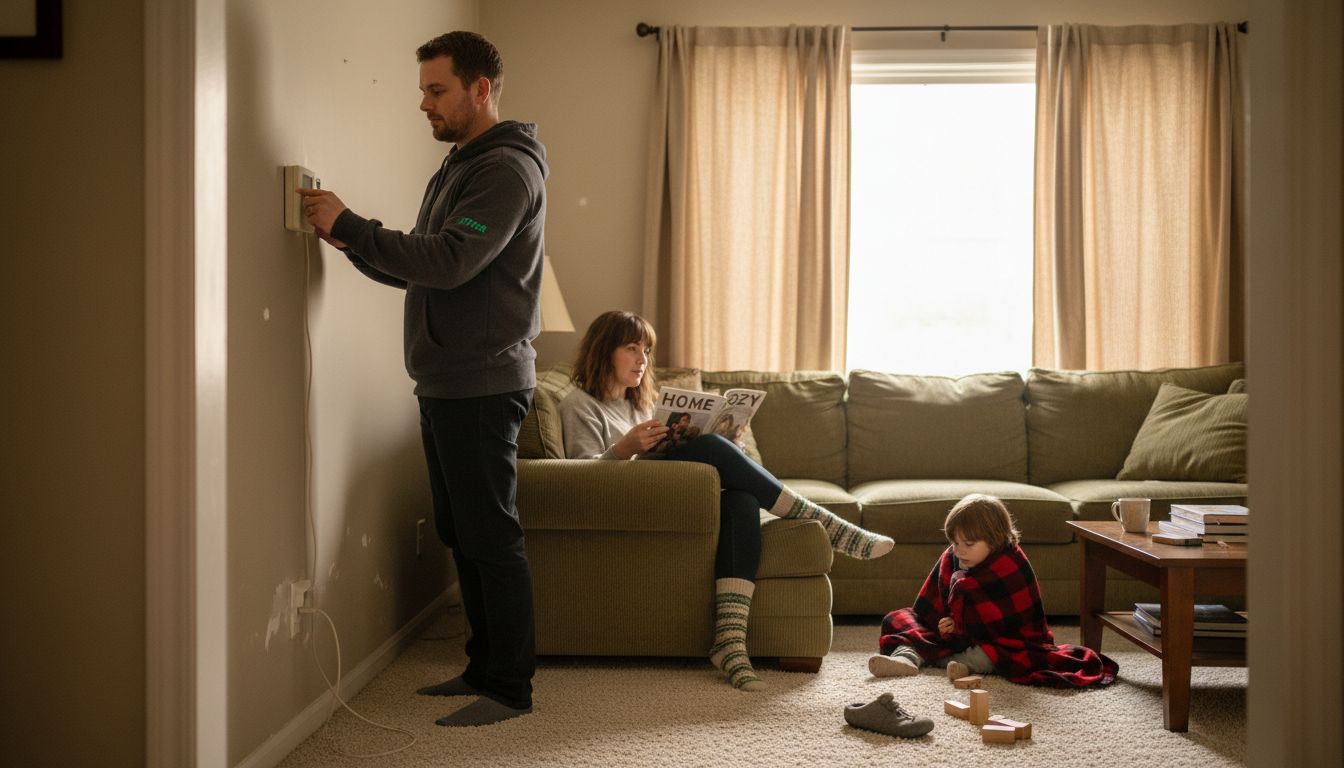
Pro Heating Strategy: Program your thermostat to automatically lower temperatures during sleeping hours and when the house is empty, then raise temperatures shortly before you return or wake up. This approach can save up to 10% on annual heating costs while maintaining comfortable living conditions.
How Heating Systems Consume Energy
Heating systems are complex machines that consume significant energy throughout their operational cycle. Building energy consumption represents a substantial portion of total energy usage in the United States, with HVAC systems playing a critical role in this dynamic. Understanding how these systems generate and distribute heat helps homeowners make more informed decisions about energy efficiency and cost management.
The energy consumption of heating systems depends on multiple factors, including system design, insulation quality, and operational strategies. When a heating system activates, it must overcome thermal resistance in your home, generating heat that counteracts ambient temperature differences. This process requires significant electrical or fuel energy, with the initial startup and temperature maintenance phases being particularly energy-intensive. Modern systems utilize complex heat exchange mechanisms that transfer thermal energy from a heat source to indoor spaces, but each temperature transition demands substantial power.
Interestingly, energy efficiency research indicates that HVAC systems account for approximately 35% of total building energy consumption. This significant percentage underscores the importance of strategic heating management. Factors like thermostat settings, home insulation, and system maintenance dramatically influence overall energy efficiency. Older or poorly maintained heating systems can consume even more energy, creating unnecessary financial burden for homeowners.
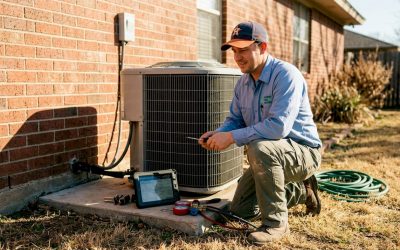
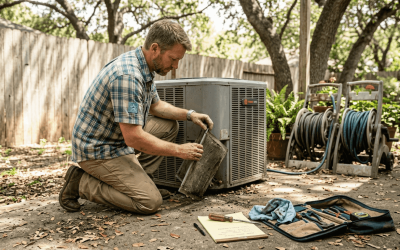
Pro Heating Efficiency Tip: Conduct an annual professional HVAC system inspection to ensure optimal performance and identify potential energy-wasting components. Regular maintenance can improve system efficiency by 15-20%, reducing overall energy consumption and extending your heating system’s operational lifespan.
Here’s how major factors impact heating energy consumption:
| Factor | Energy Impact | Homeowner Control |
|---|---|---|
| Insulation Quality | High if poor | Can improve insulation |
| System Maintenance | Lowers consumption | Schedule inspections |
| Thermostat Usage | Significant savings | Use programmable unit |
| Heating System Age | Higher if older | Upgrade if possible |
Daily versus Intermittent Heating Costs
Understanding the financial implications of heating strategies requires a nuanced approach to energy consumption. While many homeowners assume continuous heating is most economical, home heating research reveals a more complex reality. The cost-effectiveness of heating methods varies significantly depending on factors like home insulation, system type, and individual usage patterns.
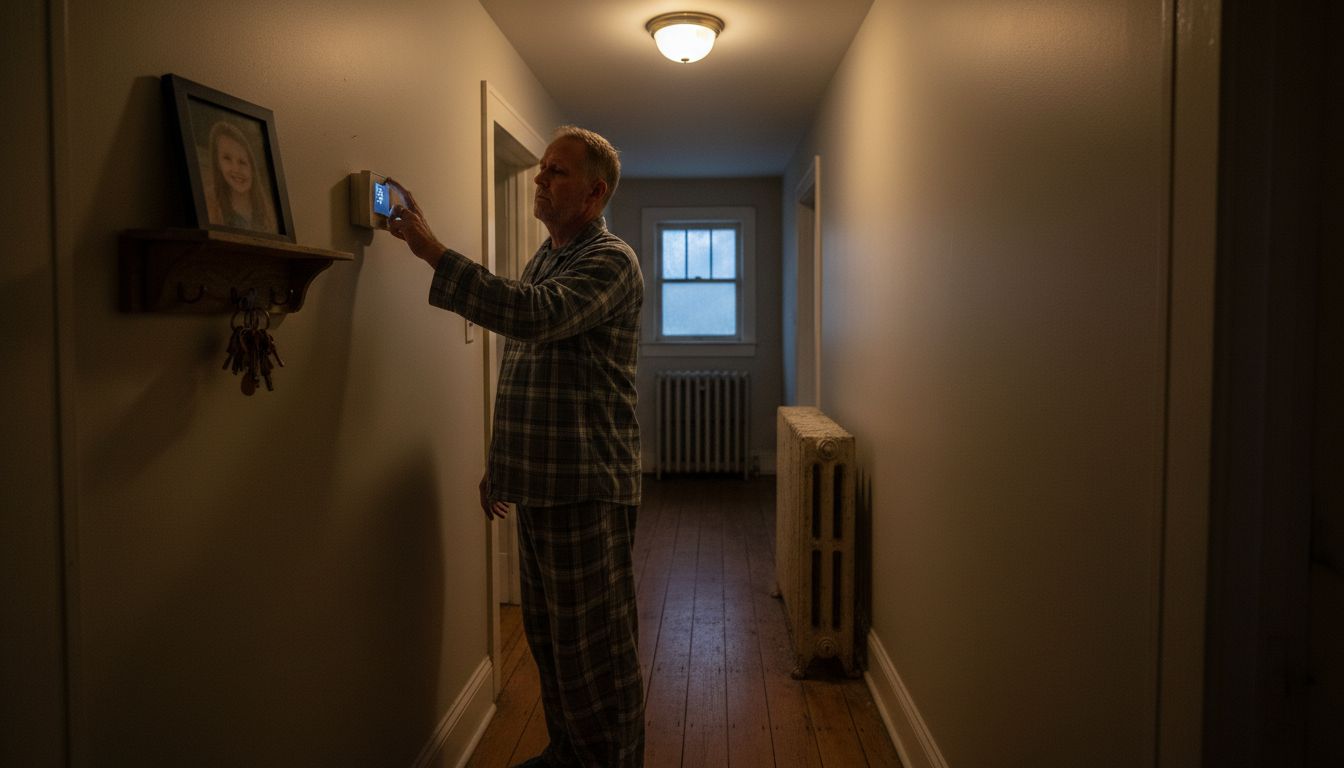
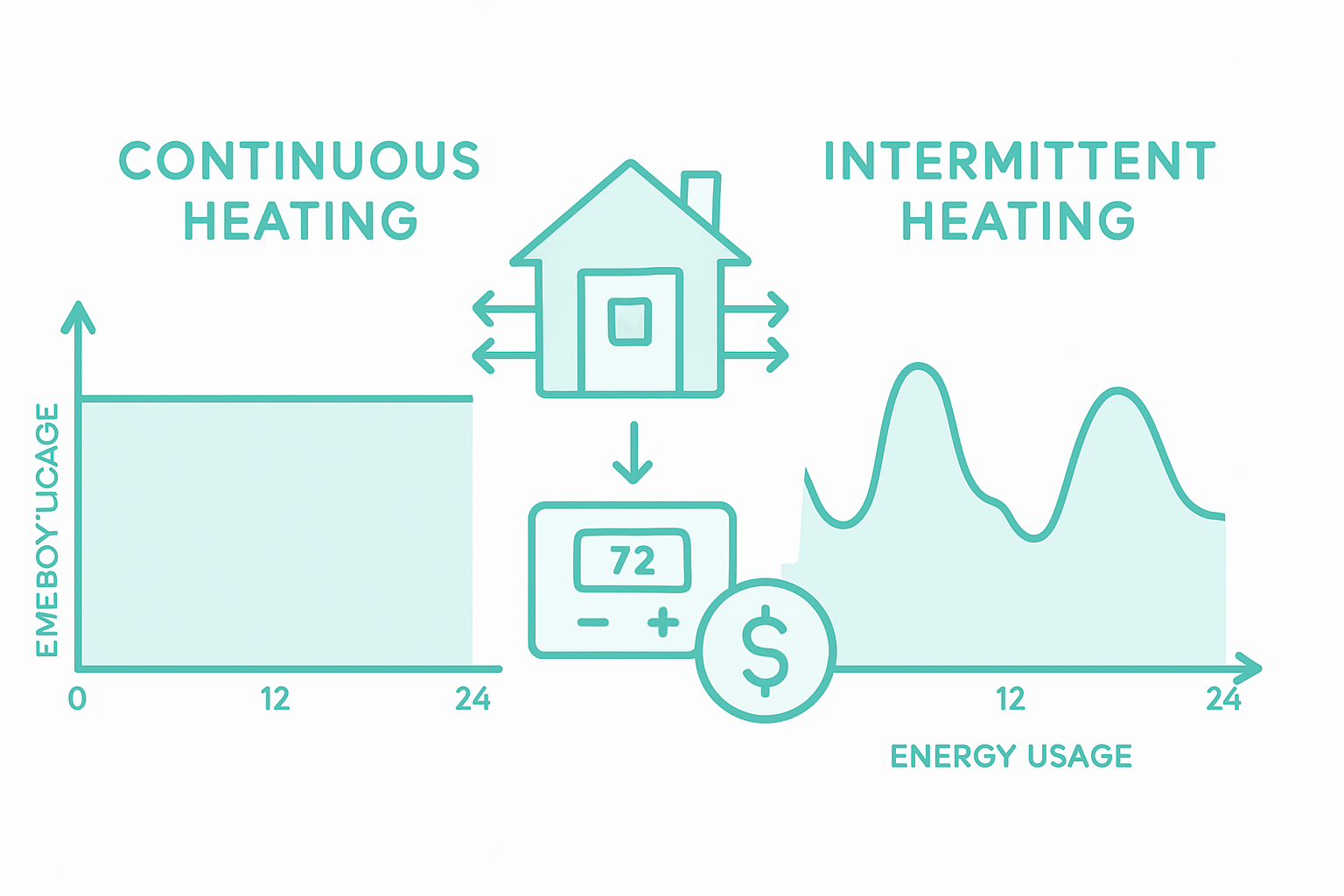
Traditional heating systems incur different energy costs when comparing daily continuous operation versus strategic intermittent heating. When a heating system runs constantly, it expends energy maintaining a consistent temperature, which can be less efficient than allowing slight temperature variations. The energy required to restart a heating system is often less than the cumulative energy consumed by keeping it running at a constant level. This principle means that turning down your thermostat during periods of low occupancy or overnight can generate meaningful cost savings.
However, the strategy is not universal across all heating technologies. Home heating systems with heat pumps, for instance, operate most efficiently when maintaining a relatively consistent temperature. For these systems, frequent dramatic temperature adjustments can actually increase energy consumption. Homeowners with heat pump systems might benefit more from modest, incremental temperature changes rather than complete shutdowns or extreme fluctuations.
Pro Temperature Management Tip: Install a programmable or smart thermostat that automatically adjusts temperatures based on your daily schedule. This can help optimize energy consumption by reducing heating during low-occupancy periods while ensuring comfort when you’re home, potentially saving up to 10% on annual heating expenses.
See how common heating methods compare for efficiency and cost:
| Heating Method | Best Efficiency Approach | Potential Savings |
|---|---|---|
| Traditional Furnace | Lower temp when away/asleep | Up to 10% per year |
| Heat Pump | Maintain steady moderate temp | Varies by usage |
| Smart Thermostat | Automatically adjust schedules | Around 10% per year |
Smart Habits for Lower Energy Bills
Reducing energy expenses requires a strategic approach that goes beyond simply adjusting your thermostat. Energy efficiency research reveals that homes and commercial buildings consume a staggering 40% of total energy usage in the United States. This significant percentage underscores the importance of implementing targeted strategies to minimize energy waste and reduce monthly utility costs.
One of the most effective approaches involves addressing your home’s thermal envelope. Sealing drafts, improving insulation, and maintaining heating systems can create substantial energy savings. Small actions like weatherstripping windows, adding insulation to attics, and ensuring proper sealing around doors can prevent heat loss and reduce the workload on your heating system. These improvements not only lower energy consumption but also enhance overall home comfort and temperature consistency.
Comprehensive energy management extends beyond physical home improvements. Energy efficiency recommendations suggest that combining equipment maintenance, insulation upgrades, and strategic thermostat settings can potentially reduce energy bills by approximately 30%. This approach involves regular HVAC system maintenance, using programmable thermostats, minimizing heat loss during unoccupied periods, and understanding your specific heating system’s optimal operating parameters.
Pro Energy Savings Tip: Conduct a comprehensive home energy audit to identify specific areas of heat loss and inefficiency. Many utility companies offer free or low-cost energy assessments that can pinpoint exact opportunities for improving your home’s energy performance and reducing monthly heating expenses.
Upgrading and Maintenance for Efficiency
Improving home heating efficiency requires a comprehensive strategy that goes beyond simple repairs. Home heating system research emphasizes a whole-house approach, combining equipment maintenance with strategic upgrades to maximize energy performance. This holistic perspective recognizes that individual components work together to determine overall system efficiency.
Modern heating technologies offer significant improvements over older systems. Upgrading to high-efficiency equipment can dramatically reduce energy consumption and lower monthly utility expenses. Newer heating systems incorporate advanced technologies like variable-speed motors, improved heat exchangers, and smart control mechanisms that optimize energy use. These innovations can reduce energy waste, provide more consistent heating, and ultimately deliver substantial long-term cost savings for homeowners.
Next-generation HVAC solutions are developing rapidly, with experts aiming to reduce installed system costs by 50% within a decade. This aggressive technological advancement means homeowners have increasingly sophisticated and cost-effective options for maintaining comfortable indoor temperatures. Regular maintenance plays a crucial role in preserving system efficiency, with professional inspections helping to identify potential issues before they become costly problems.
Pro Maintenance Tip: Schedule a professional HVAC system tune-up annually before the peak heating season. This proactive approach can improve system efficiency by 10-15%, extend equipment lifespan, and help prevent unexpected breakdowns during critical winter months.
Take Control of Your Heating Costs with Expert HVAC Solutions
If you’ve been wondering whether it is cheaper to keep the heat on all day, the answer lies in smart heating management and efficient system maintenance. The article highlights common challenges like higher energy consumption from running heating systems continuously and the benefits of programmable thermostats. It also emphasizes the importance of proper insulation and regular upkeep to reduce unnecessary expenses and improve comfort. At Colley Refrigeration, we understand how overwhelming managing your home’s heating can be, especially with complex system dynamics and fluctuating energy costs

Explore our full range of heating services in the Heating and Air Conditioning Archives – Colley Refrigeration to discover how professional repairs, tune-ups, and installations can lower your energy bills. Our skilled technicians bring over 47 years of experience ensuring your system runs efficiently year-round. Don’t wait until your next heating season to save on energy costs Take the first step now with a thorough inspection and personalized advice from our team at https://colleyrefrigeration.com. For ongoing savings and peak performance check out our HVAC maintenance Archives – Colley Refrigeration to learn about preventative care that helps you avoid costly breakdowns Stay comfortable and cut heating costs today
Frequently Asked Questions
Is it more economical to keep my heating system running all day?
No, keeping your heating system running constantly is generally less cost-effective. Modern heating systems consume a lot of energy to maintain a constant temperature, leading to higher utility bills.
How can I save on heating costs without sacrificing comfort?
Program your thermostat to lower temperatures during sleeping hours and when the house is empty. This approach can save up to 10% on annual heating costs while maintaining comfortable living conditions.
What are the main factors that affect my heating system’s energy consumption?
Key factors include insulation quality, system maintenance, thermostat usage, and the age of the heating system. Improving insulation and regular maintenance can significantly reduce energy consumption.
Should I turn down the thermostat at night or when I’m not home?
Yes, lowering your thermostat during low-occupancy periods will usually save energy and reduce costs. It is often more efficient than keeping the heating system running constantly.