Heating your Sugar Land home should provide comfort without draining your budget. As aging systems lose efficiency, many homeowners find their energy bills climbing with each season. Knowing your home’s heating needs is the foundation for choosing an upgrade that delivers savings and consistent warmth. This guide leads you through every crucial step, from assessing your current setup to selecting the most energy-efficient solution, finding reliable professionals, and ensuring transparent pricing.
Quick Summary
| Key Point | Explanation |
|---|---|
| 1. Assess Your Heating Needs | Evaluate your current heating system’s performance and age to identify necessary upgrades or replacements. |
| 2. Explore Energy-Efficient Solutions | Consider modern heating technologies, such as heat pumps and high-efficiency furnaces, to improve efficiency and comfort. |
| 3. Research Local HVAC Providers | Select qualified contractors with good reviews to ensure proper installation and long-term performance of your heating system. |
| 4. Ensure Professional Installation | A thorough installation process, including load calculations and equipment sizing, is essential for optimal system performance. |
| 5. Verify System Performance and Safety | Conduct thorough post-installation testing to confirm the heating system operates efficiently and meets safety standards. |
Step 1: Assess Your Current Heating Needs
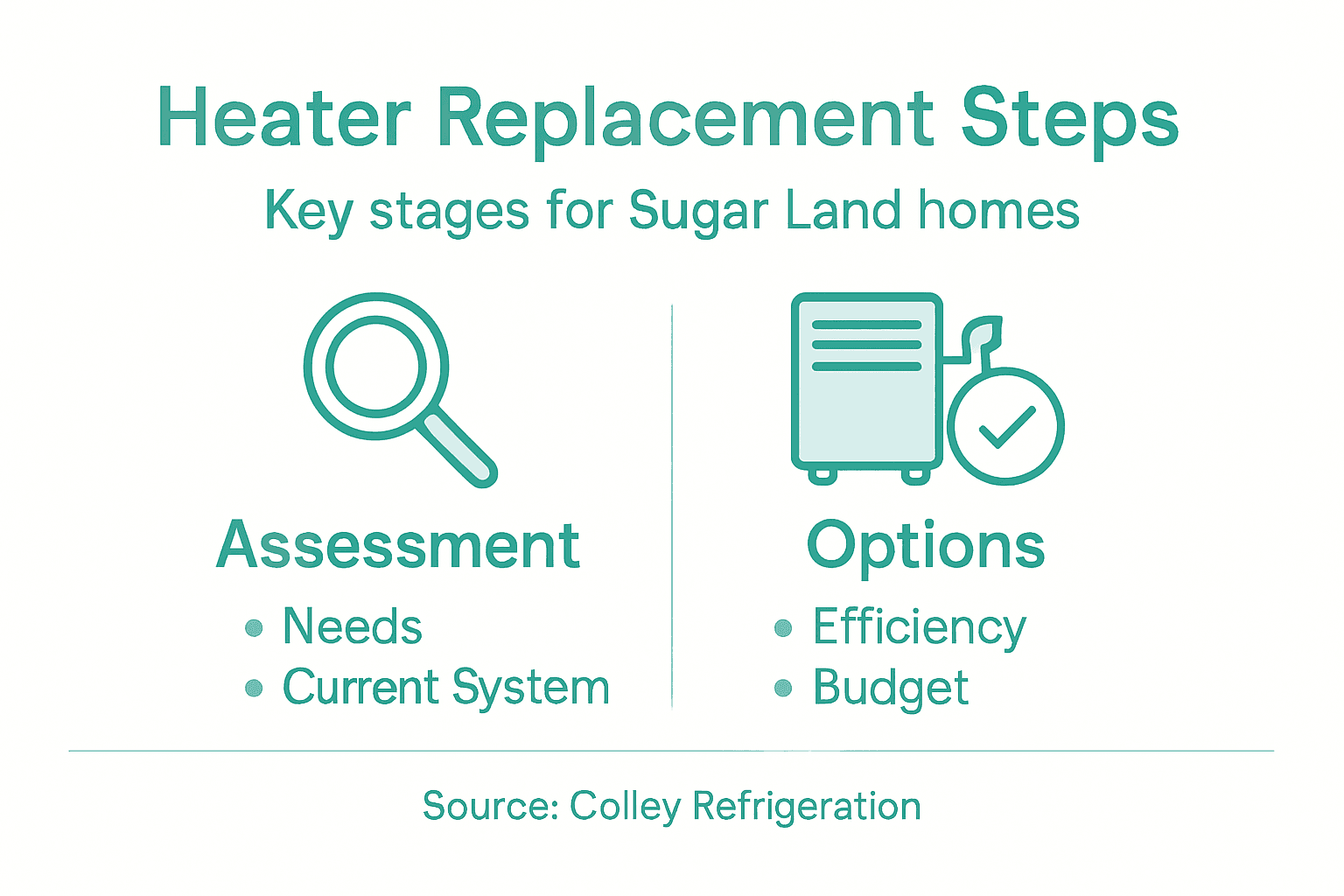
Choosing the right heating system for your Sugar Land home starts with a comprehensive evaluation of your current heating situation. Understanding your existing setup will help you make an informed decision about potential upgrades or replacements.
Begin by examining your current heating system’s performance, efficiency, and age. Older systems typically operate at lower efficiency levels, which means higher energy costs and reduced comfort. The Department of Energy suggests that systems with lower Annual Fuel Utilization Efficiency (AFUE) ratings can significantly impact your home’s energy consumption.
Key factors to consider when assessing your heating needs include:
- Home square footage
- Current insulation quality
- Number of rooms and their individual heating requirements
- Local climate conditions in Sugar Land
- Current energy usage patterns
Homeowners should also review their recent heating bills to understand their energy consumption trends. Local heating degree data can help you determine the precise heating load required for your specific geographic region.
Knowing your home’s unique heating requirements is the first step toward selecting an energy-efficient system that provides optimal comfort.
Pro tip: Consider hiring a professional HVAC technician to conduct a comprehensive home energy audit, which can provide precise insights into your specific heating needs and potential system improvements.
Step 2: Evaluate Energy-Efficient Options
Now that you understand your current heating needs, it’s time to explore modern energy-efficient heating solutions that can save you money and improve your home’s comfort. The landscape of heating technologies has dramatically evolved, offering homeowners in Sugar Land more sophisticated and economical options than ever before.

Consider exploring heating systems that can significantly reduce your energy consumption. Heat pump technologies offer remarkable efficiency, especially when paired with clean electricity sources. These systems can provide both heating and cooling, making them a versatile choice for Texas homes. The Department of Energy notes that energy-efficient products, particularly those with ENERGY STAR certification, can deliver substantial long-term savings.
Key energy-efficient heating options to evaluate include:
- High-efficiency gas furnaces
- Electric heat pumps
- Hybrid heating systems
- Geothermal heat exchangers
- Ductless mini-split systems
When comparing options, look beyond the initial purchase price and consider total lifecycle costs. Factors like installation expenses, potential utility rebates, and long-term energy savings will impact your overall investment. Modern heat pumps, for instance, can operate efficiently even at lower temperatures and may provide more cost-effective heating depending on local electricity rates.
Here’s a comparison of leading energy-efficient heating systems for Sugar Land homes:
| System Type | Typical Efficiency (%) | Best for Climate | Installation Complexity |
|---|---|---|---|
| High-efficiency Furnace | 90–98 | Colder regions | Moderate |
| Electric Heat Pump | 300–400 (COP basis) | Mild climates | Moderate |
| Geothermal Heat Pump | 400–600 (COP basis) | Any region | High |
| Ductless Mini-Split | 250–300 (COP basis) | Variable spaces | Low |
Investing in an energy-efficient heating system is not just about immediate comfort, but about creating long-term value for your home.
Pro tip: Request detailed efficiency ratings and projected annual operating costs from multiple HVAC contractors to make a truly informed comparison between different heating system options.
Step 3: Compare Local HVAC Providers and Pricing
With your energy-efficient options identified, the next critical step is finding the right local HVAC contractor who can deliver professional installation at a competitive price. Your choice of provider can significantly impact the performance and longevity of your new heating system.
Start by researching qualified HVAC contractors through reputable professional organizations like the Air Conditioning Contractors of America (ACCA). Look for professionals who are licensed, insured, and have demonstrated expertise in installing the specific type of heating system you’ve selected. Critical evaluation criteria should include:
- Verified professional certifications
- Years of local experience
- Customer reviews and ratings
- Transparent pricing structures
- Warranty and post-installation support
- Factory training for your chosen system type
Utilize online cost estimation tools to develop a baseline understanding of potential installation expenses. These calculators can help you understand typical pricing ranges based on your home’s size, system complexity, and local market rates. Remember that the lowest quote isn’t always the best value – consider the contractor’s reputation, expertise, and the comprehensiveness of their service.
A quality HVAC installation is an investment in your home’s comfort and efficiency, not just a transaction.
Pro tip: Request detailed written estimates from at least three different contractors, ensuring each quote includes a comprehensive breakdown of equipment, labor, and potential additional costs.
Step 4: Plan for Professional Installation
Now that you’ve selected your ideal heating system, the final and most crucial stage is ensuring a professional and precise installation. The quality of your HVAC system’s setup will directly impact its performance, efficiency, and long-term reliability.
Professional installation begins with comprehensive system design and load calculations. This critical process determines the exact heating requirements for your Sugar Land home, accounting for factors like square footage, insulation quality, window placement, and local climate conditions. Contractors following industry-standard methodologies will:
- Perform detailed home heat load assessments
- Select appropriately sized equipment
- Plan optimal ductwork configuration
- Ensure proper system integration
- Verify electrical and structural compatibility
- Conduct thorough system commissioning
Ensure your chosen contractor adheres to professional installation standards developed by organizations like the Air Conditioning Contractors of America (ACCA). These standards guarantee that your new heating system will be sized, installed, and calibrated to maximize efficiency and comfort. A proper installation can prevent numerous potential issues, including uneven heating, excessive energy consumption, and premature system failure.
A meticulously planned and executed HVAC installation is your blueprint for years of reliable home comfort.
Pro tip: Request a detailed written installation plan from your contractor, including specific steps for system setup, testing procedures, and post-installation performance verification.
Step 5: Verify System Performance and Safety
After installation, your new heating system requires a thorough performance verification to ensure it meets all safety and efficiency standards. This critical final step guarantees that your investment delivers optimal comfort and reliability for your Sugar Land home.
Begin by working with your HVAC technician to conduct comprehensive system performance testing. This evaluation involves measuring and documenting key performance indicators such as airflow, temperature distribution, electrical connections, and overall system efficiency. Critical verification points include:
- Checking refrigerant charge levels
- Measuring airflow through each vent
- Verifying electrical system compatibility
- Testing thermostat calibration
- Inspecting ductwork for proper sealing
- Evaluating overall system response times
Additionally, ensure your installation adheres to professional safety standards established by organizations like ASHRAE. These rigorous guidelines help protect your home by confirming that your new heating system operates safely, efficiently, and provides consistent thermal comfort. Professional verification can identify potential issues before they become costly problems, ultimately extending your system’s operational lifespan.
This summary highlights key verification steps for a new heating system:
| Verification Area | Purpose | Typical Method |
|---|---|---|
| Airflow Calibration | Ensures consistent heat output | Measure vent airflow |
| Thermostat Accuracy | Maintains temperature control | Digital temperature testing |
| Ductwork Integrity | Prevents energy loss | Visual inspection and sealing |
| Safety Compliance | Meets national standards | Review documents and checks |
A meticulous performance verification is your guarantee of a safe, efficient, and reliable heating system.
Pro tip: Request a detailed written performance report from your technician, documenting all test results and confirming the system meets manufacturer and industry standards.
Upgrade Your Heating System with Trusted Local Experts
Replacing your heater in Sugar Land means making complex decisions about comfort, efficiency, and long-term savings. The challenges of selecting the right system, understanding energy-efficient options, and ensuring professional installation can feel overwhelming. With over 47 years of experience, Colley Refrigeration is here to simplify that process for you by providing expert guidance and trusted HVAC solutions tailored to your home’s unique needs.

Explore our Heating and Air Conditioning Archives – Colley Refrigeration to learn more about energy-efficient systems and reliable service. Don’t wait to improve your home’s comfort and reduce energy bills. Contact us today at https://colleyrefrigeration.com for transparent pricing, professional installation, and 24/7 emergency support. Make the smart choice now and experience the difference of skilled local HVAC professionals.
Frequently Asked Questions
What factors should I consider when assessing my current heating needs in Sugar Land?
To assess your current heating needs, consider your home’s square footage, insulation quality, number of rooms, and local climate conditions. Review your recent heating bills to identify energy consumption trends and ensure your new system matches your unique requirements.
How do I evaluate energy-efficient heating options for my home?
Evaluate energy-efficient heating options by comparing their efficiency ratings and long-term costs, including installation and potential utility rebates. Look for systems with ENERGY STAR certification to ensure substantial savings and consider how they respond to the local climate in Sugar Land.
What should I look for when choosing a local HVAC contractor for installation?
When choosing an HVAC contractor, look for verified certifications, years of experience, customer reviews, and transparent pricing structures. Request written estimates from multiple contractors to compare their services and pricing comprehensively.
What is the installation process for a new heating system?
The installation process involves professional system design, load calculations, and ensuring compatibility with your home. Work with your contractor to install the equipment properly, integrate ductwork, and conduct thorough system testing to maximize efficiency and performance.
How can I verify the performance and safety of my new heating system?
Verify the performance and safety of your new heating system by conducting comprehensive performance testing with your HVAC technician. Check airflow, temperature distribution, and safety compliance to ensure the system operates effectively and meets industry standards.
Recommended
-
- Best Heating Systems for Texas Homes: Cost, Comfort and Efficiency Compared – Colley Refrigeration
- AC Replacement vs Heat Pump: Best HVAC Upgrade for Your Home
- Is a Heat Pump System the Right Heating Solution for Your Home? – Colley Refrigeration
- HVAC System Types Explained: Complete Comparison Guide – Colley Refrigeration