New HVAC efficiency rules are about to shake up how homeowners manage their energy bills. The new SEER2 standards can require a minimum rating of 14.3 in southern states, up from the previous 13, and that means your current system could soon be outdated. Most people think installing a new HVAC is just about swapping units, but it actually affects your comfort, your wallet, and even what you owe at tax time. Understanding these changes up front can make the next steps much cheaper and simpler.
Below is a step overview table to help you quickly understand the main actions, approximate effort, and key outcomes for upgrading your HVAC to SEER2 compliance.
| Step | Description | Difficulty | Key Outcome |
|---|---|---|---|
| 1 | Assess your current HVAC system[NULL]27s efficiency | Moderate | Identify if your system needs an upgrade |
| 2 | Research SEER2 standards for your area | Easy | Understand regional regulatory requirements |
| 3 | Consult with HVAC professionals | Moderate | Get expert recommendations and cost estimates |
| 4 | Choose an energy-efficient system | Challenging | Select a system that meets SEER2 standards |
| 5 | Schedule installation with certified technicians | Moderate | Ensure professional, compliant installation |
| 6 | Verify performance and maintenance plan | Easy | Maintain long-term efficiency and compliance |
Table of Contents
- Step 1: Assess Your Current HVAC System’s Efficiency
- Step 2: Research SEER2 Standards Relevant to Your Area
- Step 3: Consult with HVAC Professionals for Upgrading Options
- Step 4: Choose an Energy-Efficient System That Meets SEER2 Standards
- Step 5: Schedule Installation with Certified Technicians
- Step 6: Verify System Performance and Maintenance Plan
Quick Summary
| Key Point | Explanation |
|---|---|
| 1. Assess Your HVAC System’s Efficiency | Check the SEER rating and overall condition to understand energy efficiency and potential upgrades. |
| 2. Research Local SEER2 Standards | Understand the specific efficiency requirements for your region to ensure compliance and effective cooling. |
| 3. Consult HVAC Professionals | Get expert advice on system performance, upgrades, and compliance with SEER2 standards for personalized solutions. |
| 4. Choose an Energy-Efficient System | Select a system with SEER2 ratings above 14.3 and features that optimize energy savings and comfort. |
| 5. Establish a Maintenance Plan | Schedule regular check-ups and monitoring to maintain efficiency and safeguard your HVAC investment over time. |
Step 1: Assess Your Current HVAC System’s Efficiency
Understanding your current HVAC system’s efficiency is the critical first step toward reducing energy costs and preparing for upcoming SEER2 standards. Efficiency assessment allows homeowners to make strategic decisions about potential system upgrades or improvements. Most residential HVAC systems have a manufacturer’s specification plate located on the outdoor condensing unit, which provides crucial information about the system’s age and energy performance.
To begin your assessment, locate the specification plate and carefully examine its details. Look specifically for the SEER (Seasonal Energy Efficiency Ratio) rating, which indicates how efficiently your current system converts electricity into cooling power. Older systems typically have lower SEER ratings between 8 and 10, while newer models range from 13 to 21. The emerging SEER2 standards will require minimum ratings of 14.3 for central air conditioners in southern regions and 13.8 for northern areas, signaling a significant shift in energy efficiency requirements.
Careful visual inspection can reveal additional insights about system age and potential inefficiencies. Check for visible wear, rust, or mechanical damage that might compromise performance. Listen for unusual sounds during system operation, which could indicate underlying mechanical issues reducing overall efficiency. You might also want to review our guide on energy efficient HVAC to gain deeper insights into system performance evaluation.
If your system is more than 10 years old or has a SEER rating below 14, it likely qualifies for an efficiency upgrade.
 Professional HVAC technicians can perform a comprehensive diagnostic assessment, providing precise measurements of your system’s current performance and recommendations for improvement. These evaluations help homeowners understand potential energy savings and make informed decisions about future HVAC investments.
Step 2: Research SEER2 Standards Relevant to Your Area
Researching SEER2 standards requires a strategic approach to understanding regional energy efficiency requirements and their potential impact on your home. The new efficiency standards are not uniform across the United States, with different regulations established for various climate zones to account for unique heating and cooling demands.
According to the U.S. Department of Energy, regional variations play a critical role in determining SEER2 compliance. For homeowners in southern states like Texas, the minimum efficiency standards are typically more stringent due to longer cooling seasons and higher ambient temperatures. The southern region now requires a minimum SEER2 rating of 14.3 for central air conditioning systems, which represents a significant upgrade from previous efficiency benchmarks.
To conduct thorough research, start by consulting official government energy websites and local utility resources. Many states provide detailed guidance on new HVAC efficiency standards, including specific requirements for residential and commercial properties. Check with your state’s energy office or consult our maintenance guide for additional insights into regional efficiency requirements. Pay special attention to the installation dates of new systems, as compliance timelines can vary and impact your upgrade strategy.
Homeowners should also consider consulting with licensed HVAC professionals who understand local building codes and can provide personalized guidance. These experts can help interpret complex regulatory language and explain how the new SEER2 standards might specifically affect your home’s heating and cooling systems. They can also provide cost-benefit analysis for potential system upgrades, helping you make an informed decision that balances regulatory compliance with long-term energy savings.
Step 3: Consult with HVAC Professionals for Upgrading Options
Consulting with HVAC professionals represents a critical step in navigating the complex landscape of SEER2 efficiency standards and system upgrades. Professional guidance transforms technical regulations into personalized solutions that match your home’s specific heating and cooling requirements. These experts bring invaluable expertise in interpreting new energy efficiency standards and recommending appropriate system modifications.
According to professional energy assessment guidelines, a comprehensive HVAC consultation should include a thorough evaluation of your current system’s performance, home architecture, and unique cooling needs. Experienced technicians will conduct precise measurements and assess factors like square footage, insulation quality, window placement, and existing ductwork to determine the most appropriate SEER2 compliant system for your property. Check out our guide on extending your HVAC system’s lifespan to understand the long-term implications of your upgrade choices.
During your consultation, prepare a list of specific questions about system compatibility, installation costs, and potential energy savings. Reputable HVAC professionals will provide transparent cost estimates and explain the long-term financial benefits of upgrading to a more efficient system. They can also help you navigate available tax credits, utility rebates, and financing options that can offset initial installation expenses. Pay attention to recommendations that go beyond simple equipment replacement, such as potential ductwork improvements or supplemental insulation that can further enhance your home’s overall energy efficiency.
The consultation process should culminate in a detailed recommendation report outlining proposed system upgrades, estimated costs, potential energy savings, and projected return on investment. Homeowners should carefully review these recommendations, asking clarifying questions and understanding the technical specifications of proposed HVAC solutions. A successful consultation provides not just a path to regulatory compliance, but a strategic approach to improving home comfort and reducing long-term energy expenses.
Step 4: Choose an Energy-Efficient System That Meets SEER2 Standards
Selecting an energy-efficient HVAC system that meets SEER2 standards requires careful consideration of multiple factors beyond simple efficiency ratings. The right system balances performance, energy savings, and your home’s unique cooling requirements. This critical decision impacts not just your immediate comfort but long-term utility expenses and environmental sustainability.
According to energy efficiency guidelines, proper system sizing is crucial for maximizing performance and efficiency. Homeowners should avoid the common mistake of selecting oversized or undersized units, which can lead to increased energy consumption and reduced system longevity. Professional HVAC technicians can perform precise calculations considering your home’s square footage, insulation quality, and local climate conditions to recommend the most appropriate system. Learn more about heat pump options that might provide additional efficiency benefits for your specific situation.
Key selection criteria should include minimum SEER2 ratings of 14.3 for southern regions, advanced features like variable-speed compressors, and compatibility with your existing home infrastructure. Modern systems often incorporate smart technology enabling precise temperature control and energy monitoring. Consider systems with additional features such as advanced air filtration, humidity control, and Wi-Fi connectivity that enhance overall home comfort while maintaining energy efficiency. These technologies not only meet regulatory standards but can potentially qualify for utility rebates and tax incentives.
When making your final selection, request detailed performance specifications, estimated annual operating costs, and warranty information from your HVAC professional. A comprehensive comparison should account for upfront installation expenses, projected energy savings, and long-term maintenance requirements. The ideal system represents an investment in your home’s comfort and efficiency, providing a balance between immediate affordability and future energy conservation goals.
Step 5: Schedule Installation with Certified Technicians
Scheduling installation with certified technicians represents the critical final step in upgrading your HVAC system to meet SEER2 standards. Professional installation ensures that your significant investment delivers maximum efficiency and performance. This process goes far beyond simply replacing old equipment with new hardware.
According to EPA guidelines, technicians must be certified to handle refrigerants and perform complex HVAC installations safely and effectively. When scheduling your installation, verify the technician’s credentials and ask about their specific experience with SEER2 compliant systems. Learn more about our comprehensive installation services to understand what a professional installation entails. Reputable HVAC companies will provide detailed documentation of their technicians’ qualifications and be transparent about their installation procedures.
Prepare your home for installation by creating clear access to the installation areas, removing furniture or obstacles near existing HVAC equipment, and ensuring electrical systems are ready for the new system. Professional technicians will typically conduct a comprehensive pre-installation assessment, which may include evaluating ductwork, electrical connections, and potential modifications needed to optimize your new system’s performance. This assessment helps prevent unexpected complications and ensures a smooth installation process.
After installation, request a complete system walkthrough from your technicians. They should demonstrate the new system’s operations, explain maintenance requirements, and provide documentation about warranty coverage. Verify that all system settings are correctly configured for maximum efficiency, and ask about recommended maintenance schedules to preserve your new HVAC system’s performance. A thorough installation process not only meets SEER2 standards but sets the foundation for years of reliable, energy-efficient home comfort.
Step 6: Verify System Performance and Maintenance Plan
Verifying your new HVAC system’s performance and establishing a comprehensive maintenance plan is the final crucial step in ensuring long-term energy efficiency and system reliability. This step transforms your investment from a simple equipment upgrade to a strategic approach for ongoing home comfort and energy management.
According to energy efficiency maintenance guidelines, regular system check-ups are essential to preserving the high performance of your new SEER2 compliant system. Immediately after installation, schedule a comprehensive performance evaluation with your HVAC technician to establish baseline efficiency measurements. Learn more about extending your HVAC system’s lifespan to understand the importance of proactive maintenance.
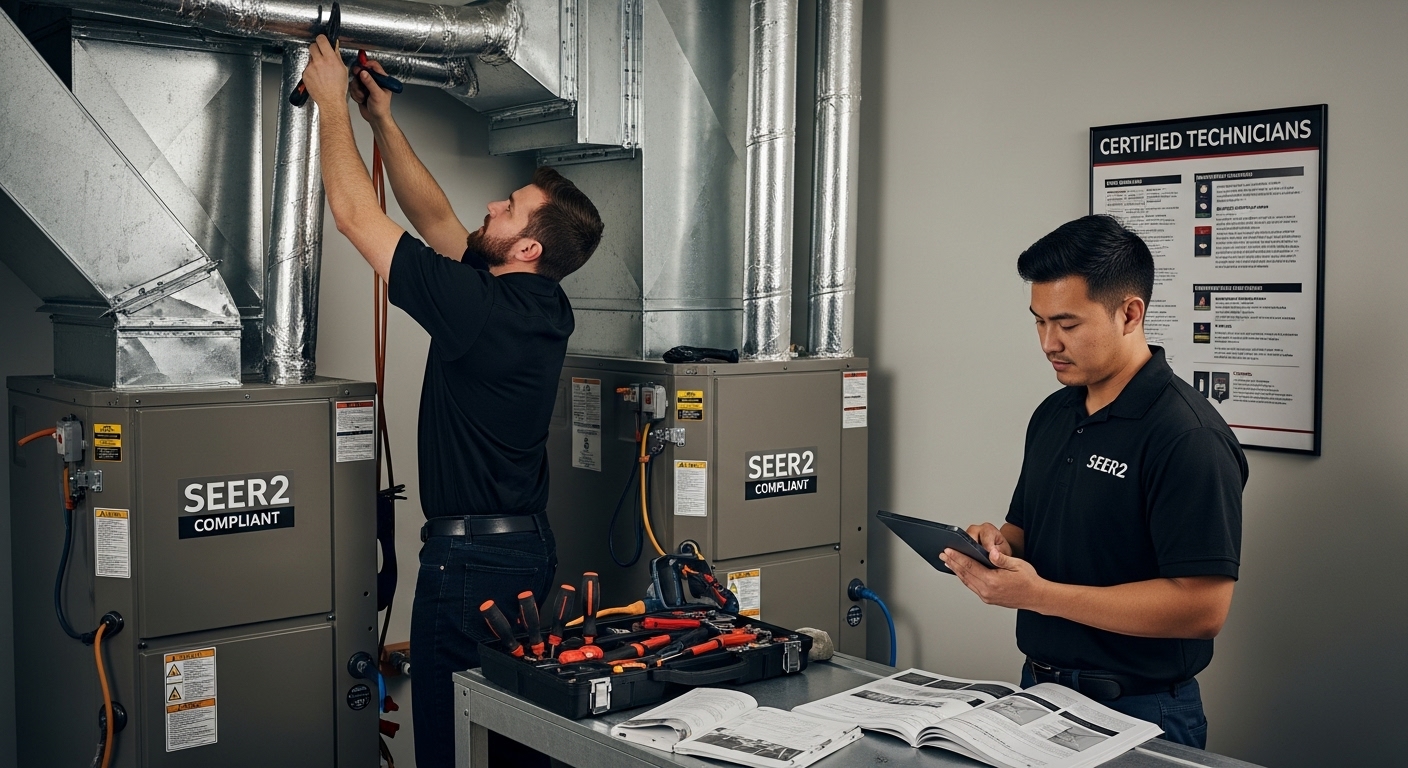
Develop a structured maintenance schedule that includes quarterly inspections, annual professional tune-ups, and regular filter replacements. These routine checks help maintain optimal system performance, prevent unexpected breakdowns, and ensure that your HVAC system continues to operate at peak efficiency. During these maintenance sessions, technicians will assess refrigerant levels, clean critical components, check electrical connections, and verify that the system maintains its expected SEER2 performance standards.
Homeowners should also invest in digital monitoring tools that track system performance, energy consumption, and potential maintenance needs. Many modern HVAC systems include smart technology features that provide real-time efficiency data and performance alerts. Keep detailed records of all maintenance activities, professional inspections, and system performance metrics. These documents not only help you track your system’s long-term efficiency but can also be valuable for warranty purposes and potential future system upgrades. By committing to a proactive maintenance approach, you protect your investment and ensure continuous energy savings throughout your new HVAC system’s lifecycle.
This table provides a maintenance checklist to verify ongoing system performance and ensure your investment in a new SEER2 compliant HVAC pays off.
| Maintenance Task | Frequency | Purpose |
|---|---|---|
| System performance evaluation by professional | Annually | Confirm continued efficiency and detect issues early |
| Filter replacement | Every 1-3 months | Maintain air quality and system airflow |
| Check refrigerant levels | Annually | Ensure optimal cooling performance |
| Clean air handler and outdoor unit | Seasonally | Improve system efficiency and longevity |
| Inspect electrical connections | Annually | Prevent safety hazards and malfunctions |
| Record maintenance activities | Ongoing | Track system history and warranty compliance |
Ready for SEER2? Upgrade Your Comfort and Savings Now
If you are feeling uncertain about where your current HVAC stands with the new SEER2 standards, you are not alone. Many Lake Jackson homeowners are worried about rising energy costs, system inefficiency, and strict regional regulations. You want a system that meets local requirements, saves money on bills, and keeps your family comfortable through every Texas season. Our recent article discussed how evaluating SEER ratings, understanding energy efficiency, and upgrading your HVAC can be a daunting process. But you do not have to tackle this challenge alone. Visit our Heating and Air Conditioning page for clear answers and expert local guidance.

Imagine an HVAC system that is engineered for maximum efficiency, backed by 24/7 expert care, and tailored to your home’s needs. At Colley Refrigeration, we make the SEER2 transition simple and worry-free. Enjoy transparent pricing, fast installation, and dedicated support that gets you ahead of new energy regulations. Do not wait until your old system lets you down. Request a quote or learn more about our services today and ensure your comfort and efficiency for years to come.
Frequently Asked Questions
What is SEER and why is it important for my HVAC system?
SEER stands for Seasonal Energy Efficiency Ratio and measures how efficiently your HVAC system converts electricity into cooling. A higher SEER rating indicates greater efficiency, leading to lower energy costs and a smaller carbon footprint.
How can I assess the efficiency of my current HVAC system?
You can assess your HVAC system’s efficiency by locating the manufacturer’s specification plate to find its SEER rating. Additionally, conduct a visual inspection for wear or damage and consult a professional for a comprehensive diagnostic evaluation.
What are the minimum SEER2 standards I should be aware of?
The SEER2 standards require a minimum rating of 14.3 for central air conditioners in regions with long cooling seasons. It’s essential to research the specific requirements for your area as regulations may vary based on climate.
Why should I consult with HVAC professionals before upgrading my system?
HVAC professionals provide expertise in interpreting efficiency standards and can recommend systems that match your home’s cooling requirements. They also help with accurate system sizing and offer insights on potential energy savings and available incentives.
Recommended
- What is Energy Efficient HVAC? Understanding Its Benefits – Colley Refrigeration
- Rising Costs of New Air Conditioning Systems in 2025 – Colley Refrigeration
- Extending the Lifespan of Your HVAC System: 3 Simple Tips
- 7 Best Split Type Aircon Options for Your Home and Business – Colley Refrigeration
- Energy Efficient HVAC Guide 2025 for Louisville & Southern Indiana – HVAC Service and Repair | Louisville, KY | Project Heating & Cooling