More than 40 million American adults suffer from allergies, and for homeowners in Lake Jackson, Texas, poor indoor air quality often worsens these symptoms. Everyday life brings dust, pollen, and humidity challenges unique to the region, making respiratory comfort a real concern. This overview reveals how whole house air purification systems work with your existing HVAC to safeguard your family’s health, highlighting crucial features that specifically benefit Texas homes.
Key Takeaways
| Point | Details |
|---|---|
| Whole House Integration | Whole house air purifiers connect with existing HVAC systems to provide comprehensive air treatment throughout the home. |
| Filtration Technologies | Multiple technologies, including HEPA and UVGI, work together to address various indoor air contaminants effectively. |
| Texas Climate Considerations | Systems must be tailored for high humidity and particulate pollution prevalent in Texas to ensure optimal performance. |
| Costs vs. Health Benefits | While investment costs vary, potential health benefits for respiratory conditions can justify expenses for many homeowners. |
What Are Whole House Air Purifiers?
Whole house air purifiers are advanced filtration systems designed to improve indoor air quality throughout an entire home in Texas. Unlike portable room units, these comprehensive systems integrate directly with your home’s existing heating, ventilation, and air conditioning (HVAC) system, ensuring continuous air treatment across every room.
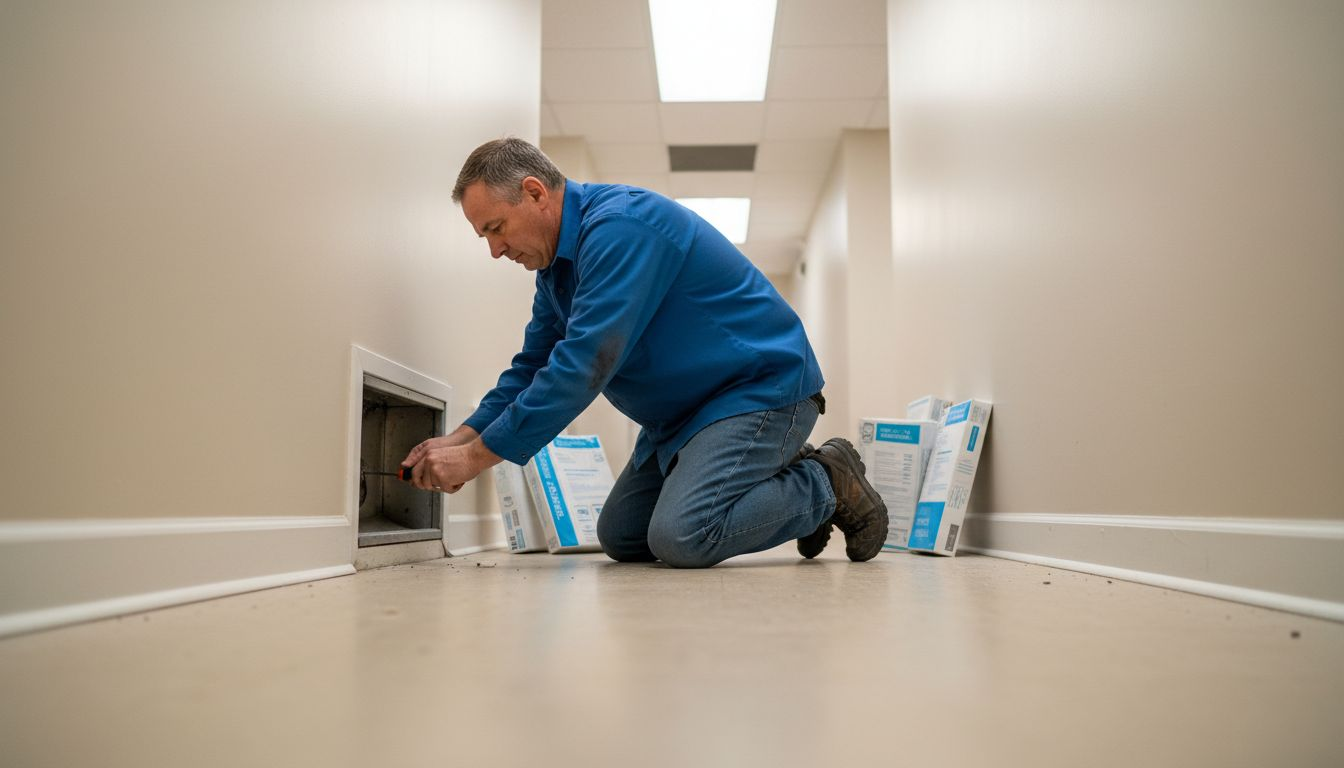
These sophisticated systems work by filtering and cleaning the air as it circulates through your home’s ductwork. They capture and neutralize various airborne contaminants including dust, pollen, pet dander, smoke particles, and microscopic allergens that can trigger respiratory issues. By targeting pollutants at the source and providing whole-home coverage, these purification systems offer a significant upgrade from traditional standalone air cleaning methods.
Whole-house air purifiers typically incorporate multiple filtration technologies to maximize effectiveness. Common components include high-efficiency particulate air (HEPA) filters, activated carbon filters, ultraviolet light sterilization, and electrostatic precipitators. Each technology targets different types of pollutants, creating a multi-layered defense against indoor air contamination. For homeowners in areas like Clute, Pearland, Brazoria, and Montgomery, these systems can be especially beneficial given the region’s diverse environmental conditions.
Pro tip: Before purchasing a whole-house air purification system, have a professional HVAC technician assess your home’s specific air quality needs and existing ductwork to ensure optimal performance and compatibility.
Common Types and How They Work
Whole house air purification systems come in several distinct technologies, each designed to target specific types of indoor air contaminants. Comprehensive air purification approaches utilize multiple filtration methods to create a multi-layered defense against airborne pollutants that can impact home air quality in Texas.
The primary types of whole house air purification technologies include HEPA filtration systems, which excel at capturing microscopic particulate matter like dust, pollen, and pet dander. Activated carbon filters specialize in absorbing odors, gases, and volatile organic compounds, making them particularly effective for homes with smokers or chemical sensitivities. Ultraviolet germicidal irradiation (UVGI) systems use specialized light wavelengths to neutralize biological contaminants such as bacteria, viruses, and mold spores, providing an additional layer of air sanitization.
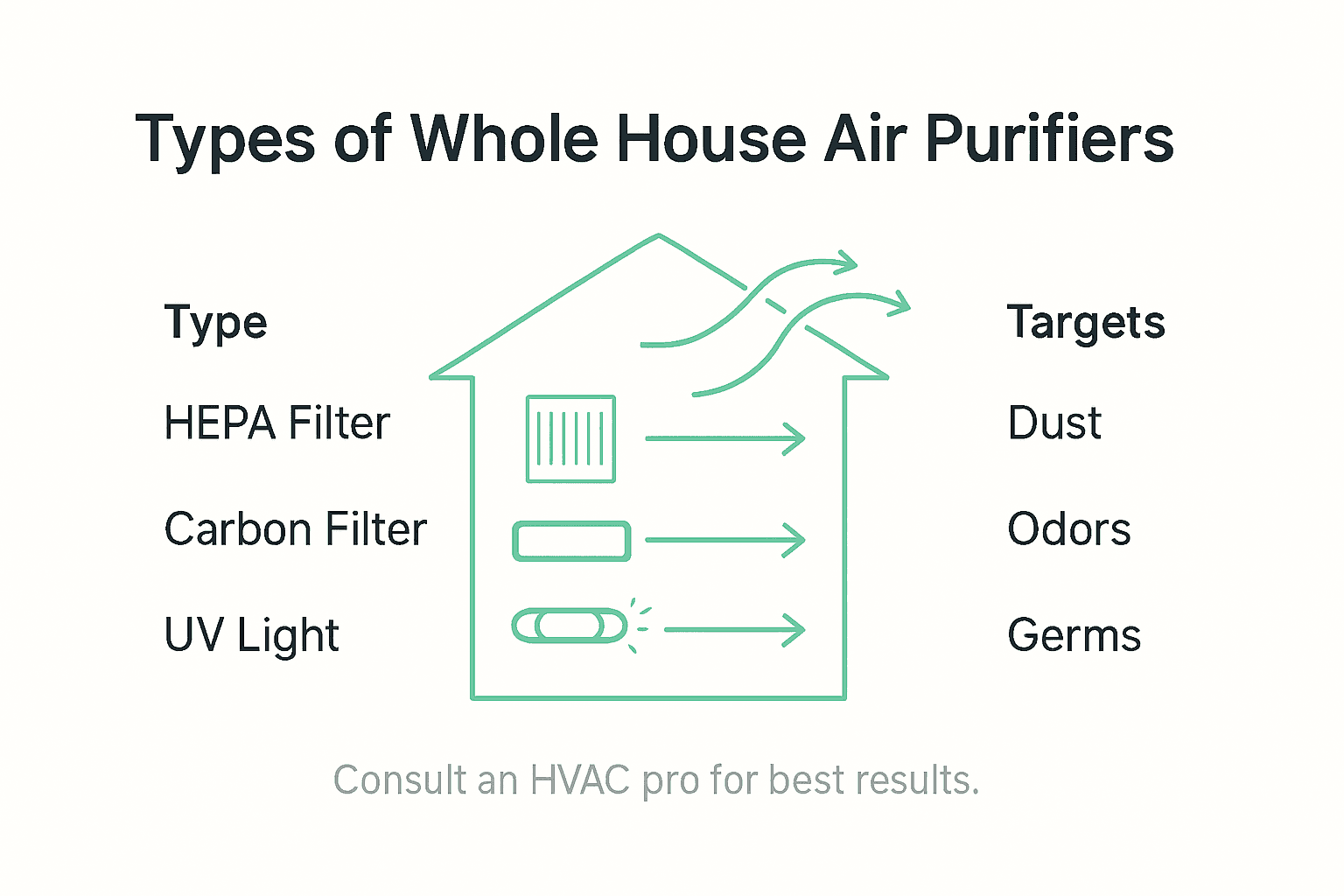
Electrostatic precipitators and ionization systems represent another innovative approach to air purification. These technologies charge airborne particles, causing them to stick to collector plates or surfaces, effectively removing them from circulation. For homeowners in areas like Clute, Pearland, Brazoria, and Montgomery, combining multiple technologies can provide the most comprehensive air quality improvement, addressing everything from allergens and dust to odors and potential pathogens.
Pro tip: Consider consulting with an HVAC professional to design a custom air purification solution that combines multiple technologies to address your specific indoor air quality challenges.
Here’s a summary comparison of major whole-house air purification technologies and their main benefits:
| Technology Type | Targeted Contaminants | Main Benefit | Notable Limitation |
|---|---|---|---|
| HEPA Filtration | Dust, pollen, pet dander | Captures fine particles | Does not remove gases |
| Activated Carbon Filter | Odors, VOCs, chemicals | Eliminates unpleasant smells | Limited particulate filtration |
| UVGI (Ultraviolet Light) | Bacteria, viruses, mold spores | Kills microorganisms | No effect on particulates |
| Electrostatic Precipitator | Dust, smoke, allergens | Removes charged particles | Plates need regular cleaning |
| Ionization System | Microscopic airborne pollutants | Reduces ultra-fine particles | May produce ozone |
Key Features for Texas Climate Needs
Texas homeowners require whole-house air purification systems specifically designed to address the state’s unique environmental challenges. Air purification solutions must be tailored to handle high particulate matter and extreme climate conditions prevalent in regions like Clute, Pearland, Brazoria, and Montgomery.
Key features for Texas climate needs include robust high-efficiency particulate air (HEPA) filtration capable of capturing fine dust, pollen, and allergens that are common in the state’s dry and windy environments. Advanced systems should incorporate humidity control mechanisms to combat the high moisture levels that can promote mold and mildew growth. Carbon filtration becomes particularly crucial in urban and industrial areas, where volatile organic compounds (VOCs) and ozone levels can significantly impact indoor air quality.
Additionally, the ideal whole-house air purification system for Texas homes should prioritize energy efficiency and compatibility with existing HVAC infrastructure. High-performance systems recommended by the Environmental Protection Agency emphasize the importance of selecting purifiers that can handle large airflow volumes while maintaining low energy consumption. This becomes especially important in areas experiencing prolonged summers and high temperatures, where air conditioning systems are under constant strain.
Pro tip: Consider having a professional HVAC technician perform a comprehensive indoor air quality assessment to identify the most suitable air purification technologies for your specific home environment.
Below is a table outlining important factors to evaluate when selecting a whole-house air purifier for Texas homes:
| Consideration | Why It Matters | Impact on Texas Homes |
|---|---|---|
| Climate Compatibility | Handles heat, humidity, pollutants | Reduces mold and allergy risk |
| Energy Efficiency | Lowers operating costs | Saves money during long summers |
| Maintenance Requirements | Ensures long-term effectiveness | Adaptable to local air quality |
| Installation Expertise | Proper system integration | Meets regional code requirements |
Comparing Costs and Health Benefits
Whole-house air purification systems represent a significant investment for Texas homeowners, with costs varying widely based on technology and home size. Clinical studies demonstrate measurable health benefits that can potentially offset these initial expenses, particularly for individuals with respiratory sensitivities or allergies.
The financial investment for a comprehensive whole-house air purification system typically ranges from $500 to $4,000, depending on the complexity of the technology and the square footage of the home. Consumer Reports suggests that ongoing maintenance costs include regular filter replacements and minimal increases in energy consumption. These systems prove most cost-effective for families in regions like Clute, Pearland, Brazoria, and Montgomery, where environmental factors such as high humidity, industrial pollution, and seasonal allergens can significantly impact indoor air quality.
Health benefits are particularly noteworthy for residents with chronic respiratory conditions, allergies, or sensitivities. Advanced whole-house air purifiers can reduce airborne particulates by up to 99.97%, potentially decreasing asthma triggers, minimizing seasonal allergy symptoms, and improving overall respiratory function. Some studies even suggest potential cardiovascular benefits from reduced particulate exposure, making these systems more than just an air quality investment but a potential long-term health strategy.
Pro tip: Request a detailed cost-benefit analysis from your HVAC professional that calculates potential health savings and energy efficiency gains specific to your home’s unique environmental conditions.
Regional Installation Facts for Lake Jackson, Clute, Pearland, Brazoria, and Montgomery
Homeowners in Southeast Texas must navigate specific regional requirements when installing whole-house air purification systems. Texas state regulations mandate that all HVAC and air purification installations be performed by licensed contractors, ensuring professional standards and safety across Lake Jackson, Clute, Pearland, Brazoria, and Montgomery.
Each municipality within these regions has unique building codes and permit requirements that impact air purification system installations. For instance, local building permits are typically required before initiating any significant HVAC modifications, which means homeowners must work closely with licensed professionals who understand the specific regulatory landscape of their individual city. Brazoria County and the surrounding areas often have detailed compliance standards that go beyond basic state requirements, necessitating careful documentation and professional expertise.
The geographic diversity of these regions introduces additional installation considerations. Areas closer to industrial zones or coastal environments like Lake Jackson may require more robust filtration systems to address higher levels of particulate matter and potential chemical pollutants. Montgomery and Pearland residents might encounter different environmental challenges, such as increased dust from construction or agricultural activities, which can influence the recommended air purification technology and installation approach.
Pro tip: Schedule a comprehensive home air quality assessment with a local HVAC professional who is familiar with the specific environmental nuances of your precise Southeast Texas location.
Mistakes to Avoid and Final Considerations
Homeowners in Lake Jackson and surrounding Texas areas must be vigilant about potential pitfalls when selecting and installing whole-house air purification systems. Common mistakes can significantly compromise the effectiveness and efficiency of your indoor air quality investment, ranging from improper system sizing to neglecting critical maintenance requirements.
Sizing and Compatibility represent critical considerations that many homeowners overlook. Incorrect HVAC system integration can dramatically reduce filtration efficiency and potentially damage existing equipment. Texas residents should avoid purchasing oversized or undersized systems that fail to match their home’s specific square footage and existing ductwork. This means carefully calculating air exchange rates, understanding your home’s unique airflow dynamics, and consulting with professional HVAC technicians who understand the nuanced requirements of areas like Clute, Pearland, Brazoria, and Montgomery.
Additionally, homeowners must be cautious about systems that generate ozone, which can potentially cause respiratory irritation. Maintenance is another crucial factor often underestimated. Regular filter replacements, annual system inspections, and understanding the specific maintenance requirements of your chosen air purification technology are essential for long-term performance. Some systems require more frequent filter changes depending on local environmental conditions, such as proximity to industrial areas or coastal regions.
Pro tip: Request a comprehensive compatibility assessment from your HVAC professional that includes detailed airflow calculations, system performance projections, and a customized maintenance schedule tailored to your specific home environment.
Improve Your Home’s Air Quality with Trusted Whole House Solutions
Texas homeowners deserve clean and healthy indoor air that protects their families from allergens, dust, and pollutants unique to our climate. If you are facing challenges like high humidity, seasonal allergies, or airborne contaminants discussed in this article, it is time to consider professional whole-house air purifiers integrated with your HVAC system. At Colley Refrigeration, we bring over 47 years of local expertise to help you select, install, and maintain advanced air purification technology designed specifically for the environments of Lake Jackson, Clute, Pearland, Brazoria, and Montgomery.

Explore our full range of Heating and Air Conditioning services to experience better air quality, energy efficiency, and comfort in your home. Don’t wait until poor indoor air affects your family’s health and well-being. Visit Colley Refrigeration today and get started with a customized whole-house air purification solution. For expert advice and dependable installation, check out our Air Conditioning Installation archive to learn how we bring quality and transparency to every job.
Frequently Asked Questions
What are whole-house air purifiers?
Whole-house air purifiers are integrated filtration systems that improve indoor air quality across an entire home by working with the existing HVAC system. They capture airborne contaminants like dust, pollen, and pet dander.
How do whole-house air purifiers compare to portable air cleaners?
Unlike portable air cleaners, which treat air in a single room, whole-house air purifiers provide continuous air treatment throughout the entire home, ensuring comprehensive coverage and a more effective solution for indoor air quality.
What types of filtration technologies are used in whole-house air purification systems?
Common filtration technologies include HEPA filters for capturing fine particles, activated carbon filters for absorbing odors and gases, UVGI systems for neutralizing biological contaminants, and electrostatic precipitators for removing charged particles.
How often do I need to maintain my whole-house air purification system?
Regular maintenance typically includes changing filters every few months and performing annual inspections for optimal performance. Maintenance frequency may vary based on your specific air quality needs and local environmental conditions.
Recommended
- Lake Jackson Whole House Air Purifier | Home Air Filtration System
- Breathe Easier: Why Indoor Air Quality Is Key for HVAC – Colley Refrigeration
- HVAC Explained: Complete Guide for Texas Homes & Businesses – Colley Refrigeration
- How Central Air Works: Complete Guide for Homeowners – Colley Refrigeration